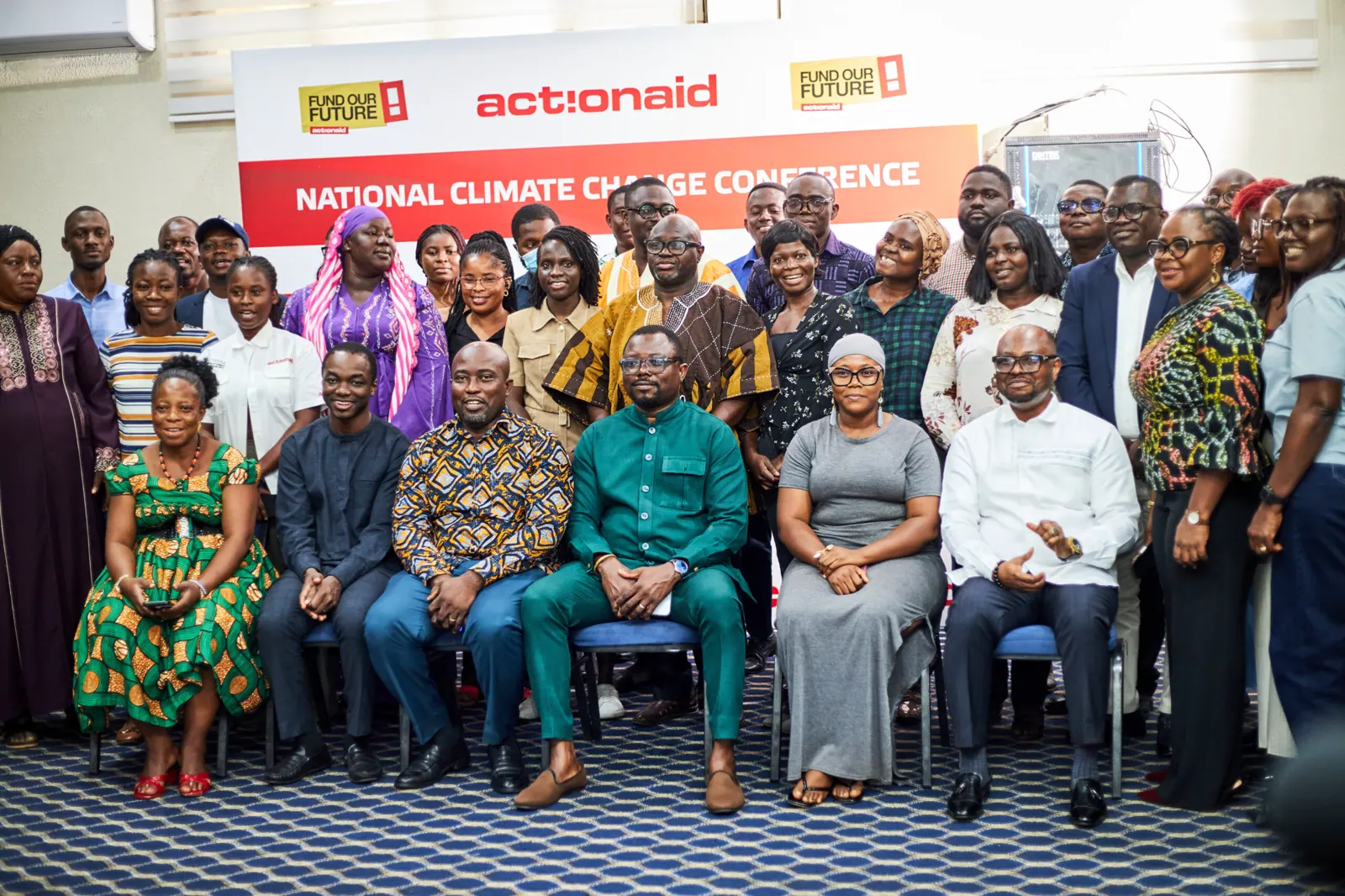
Stakeholders in Ghana's energy sector have emphasised the need for innovative and debt-conscious financing mechanisms to support the country's transition to cleaner energy. This call was made at a National Policy Dialogue on "Transitioning to a Just and Sustainable Renewable Energy Future in Ghana: Government and Civil Society Perspectives," organised by ActionAid Ghana in Accra. The dialogue highlighted the critical role of financing in ensuring a just and sustainable energy transition.
The Country Director of ActionAid Ghana, Mr John Nkaw, stressed that financing was central to ensuring Ghana's energy transition was genuinely just and sustainable. He noted that Ghana could not afford to respond to the climate crisis by creating another crisis through unsustainable borrowing. Mr Nkaw called for greater use of public and grant-based climate finance and urged policymakers to scrutinise debt-creating instruments.
According to ActionAid's 2026 flagship report, "Debt Fuels the Climate Crisis: How the Finance Flows," climate-vulnerable countries, including Ghana, are spending nearly 25 times more on debt repayments than on climate action. The report noted that 93.5 per cent of the most climate-vulnerable countries were either in debt crisis or at significant risk of debt distress. This situation underscores the need for debt-conscious financing.
Dr Charles Gyamfi Ofori, Policy Lead for Climate Change and Energy Transition at the Africa Centre for Energy Policy (ACEP), said Ghana should treat the energy transition as an economy-wide development agenda rather than solely an energy-sector issue. He advocated integrating energy-transition considerations into public investment, including the use of locally developed waste-to-energy solutions.
The Government of Ghana is developing the National Energy Transition Framework through consultations with key stakeholders. Mr Seth Mahu, Director of Renewable Energy and Green Transition at the Ministry of Energy and Green Transition, said Ghana viewed the transition from five perspectives: identifying a viable pathway towards a carbon-neutral economy, harnessing opportunities, assessing its impact, developing long-term targets and policies, and quantifying its cost.
Ghana aims to achieve net-zero emissions by 2070, requiring more than US$500 billion in financing. The Government is working with financial institutions, development finance institutions, and multilateral development banks to mobilise the required capital. Mr Mahu noted that Ghana currently had about 342.5 megawatts of installed renewable energy capacity, representing about six per cent of the national generation mix.
The Ministry of Energy and Green Transition is targeting more than 1,400 megawatts of installed renewable energy capacity by 2030, alongside more than 5,000 solar home systems for remote communities. The Government has commissioned eight renewable energy mini-grids and commenced construction of 35 additional mini-grids to connect more than 70,000 people in island and lakeside communities.
Key points
- The need for debt-conscious financing to support Ghana's energy transition
- The country's aim to achieve net-zero emissions by 2070 requires over US$500 billion in financing
- Stakeholders emphasise the importance of integrating energy-transition considerations into public investment and development planning