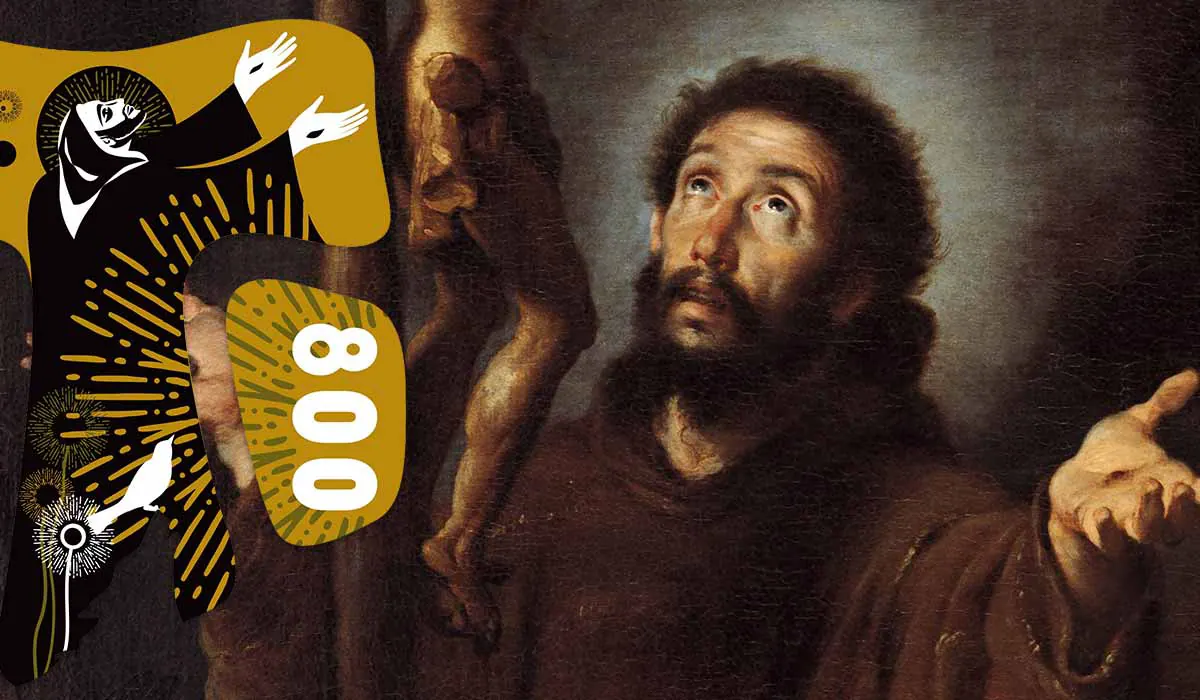
This year, the Church commemorates the 800th anniversary of the death of St Francis of Assisi, a saint renowned for his profound spirituality and love for creation. As part of a four-part series, Günther Simmermacher examines Francis' understanding of the interconnectedness of all creation, highlighting how he saw the world as a family. According to Simmermacher, Francis' vision was not merely a naive idealism but a deeply theological understanding of the world as God's gift.
St Francis of Assisi is often remembered as the patron saint of animals, with stories of him preaching to birds and taming the wolf of Gubbio. However, these accounts risk reducing Francis to a caricature of a medieval hippie. Pope Francis, in his 2015 encyclical Laudato Si', drew inspiration from Francis' spirituality, emphasizing the saint's radical understanding of the world as God's gift and humanity as its brother rather than master. This perspective underscores the depth of Francis' vision, which was grounded in his conversion experience.
Francis' conversion involved renouncing wealth, security, and social status, stripping himself of possessions and claims to ownership. By owning nothing, he encountered creation without the burden of control, viewing the world as something received rather than used. For Francis, creation was not raw materials for human exploitation but a meaningful whole, with every creature bearing the imprint of its Creator and glorifying God by existing. This conviction is central to Francis' spirituality, emphasizing God as the Father of all that exists.
Francis' understanding of universal kinship led him to address creatures as "brother" and "sister," reflecting their common origin and destiny in God. Creation, made by God, is interconnected and forms a family. The "Canticle of the Creatures," composed near the end of Francis' life, is a splendid expression of this vision. Often misinterpreted as a cheerful ode to nature, the Canticle is a spiritual hymn rooted in suffering, addressing various creatures and acknowledging their character and dignity.
In the "Canticle of the Creatures," Francis names creatures such as "Brother Sun," "Sister Moon," and "Brother Fire," emphasizing their sacredness and interconnectedness. He speaks with, not about, creation, highlighting that praise is not just a human activity but a universal one. The non-human world glorifies God by being faithful to its nature, and humans are called to join this chorus consciously and humbly. Francis' daily conduct reflected this theology, showing tenderness to animals and rescuing worms from roads.
Francis' love for creation and concern for the poor were inseparable, reflecting a deeper spiritual disorder. Exploiting the earth and exploiting the poor were symptoms of the same issue: taking rather than receiving. Francis' poverty was ecological, viewing the world as something to be contemplated, not consumed. Pope Francis' Laudato Si' echoes this insight, presenting St Francis as a model of integral ecology that recognizes the links between care for creation, care for the poor, and spiritual conversion.
Pope Francis' 2023 apostolic exhortation Laudate Deum deepens this teaching, warning that creation is not an object to be managed but a gift to be safeguarded for all, especially the vulnerable. Both Laudato Si' and Laudate Deum echo St Francis' refusal to separate ecological from moral responsibility, highlighting that environmental destruction and economic injustice are signs of humanity forgetting its place within creation. St Francis of Assisi continues to challenge modern assumptions about progress and mastery 800 years after his death.
Key points
- St Francis of Assisi's vision for creation as interconnected family emphasizes the sacredness and interconnectedness of all living beings.
- Francis' spirituality, reflected in his daily conduct and writings, underscores the importance of a right relationship with God for a right relationship with the world.
- Pope Francis' encyclicals Laudato Si' and Laudate Deum draw on St Francis' teachings, highlighting the need for integral ecology and moral responsibility.