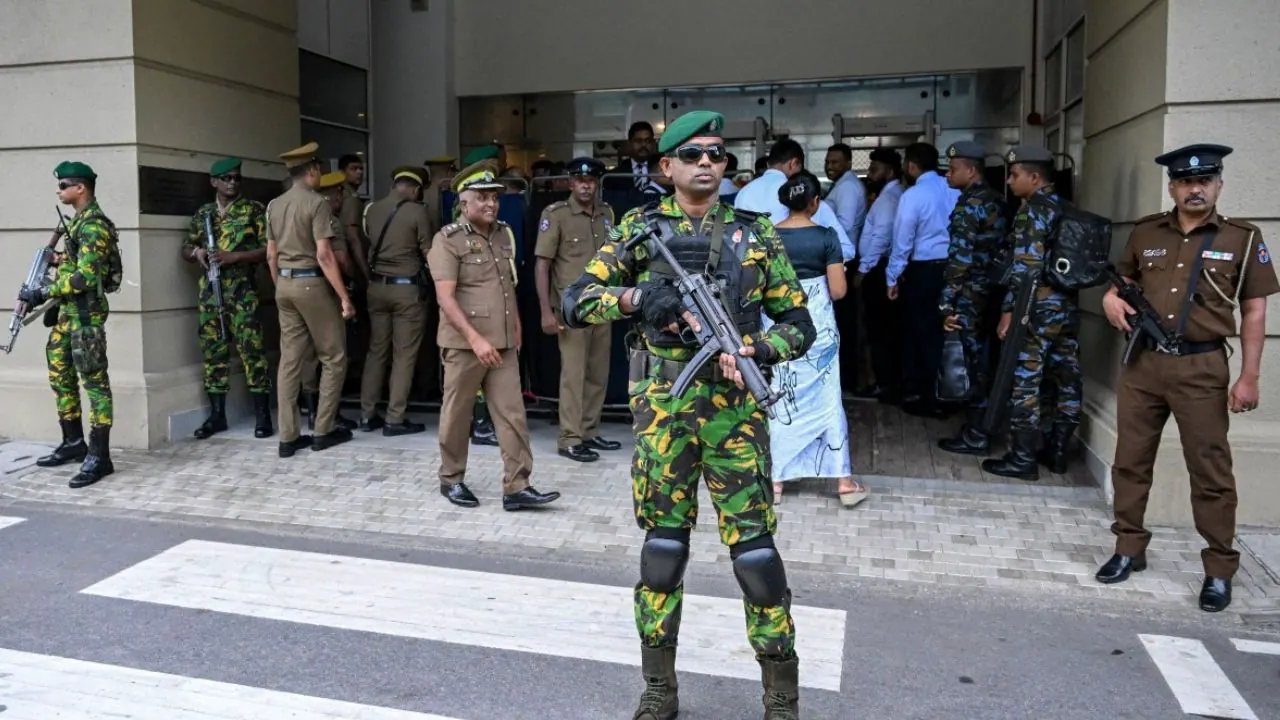
The High Court of Sri Lanka has sentenced 15 men to 220 years in prison for their roles in the 2019 Easter bombings, which killed 279 people, including 45 foreigners. The 15 men, who belong to the country's Muslim minority, were found guilty of helping the eight suicide bombers who carried out the attacks on April 21, 2019. The bombings targeted three churches and three luxury hotels, causing widespread destruction and loss of life.
The trial, which lasted five years, saw 24 men arrested shortly after the attacks appear in court. All 24 were charged with murder, attempted murder, and complicity in murder in connection with a terrorist enterprise, as well as possession of weapons and explosives. The charges carried a possible death penalty, but Sri Lanka has not executed anyone since 1976, instead imposing life imprisonment. Fourteen of the accused were found guilty on all charges, while a 15th man was convicted on some of the charges.
Nine other accused were acquitted. The court heard that Mohamed Naufar was one of the organizers of the attacks, but he and the other accused denied any involvement. The investigation and trial were closely watched, with many victims' families and survivors seeking justice. The Catholic Church in Sri Lanka welcomed the convictions, with Father Jude Fernando saying that justice had finally been obtained.
The bombings were one of the deadliest terrorist attacks in Sri Lanka's history, and the investigation revealed a complex web of involvement. The US Department of Justice has also charged three of the accused with terrorism-related offenses. Five Americans were among those killed, including a US Commerce Department official on a mission to Colombo. Citizens of 13 other countries, including Australia, the UK, and India, were also among the victims.
The investigation into the bombings took a significant turn in February with the arrest of a former intelligence officer, retired General Suresh Sallay. The public security minister described him as the "mastermind" behind the attacks. While former President Gotabaya Rajapaksa, who was in office at the time, has not been formally implicated, he has been barred from leaving the country.
The bombings were allegedly intended to create chaos before the presidential election and to pave the way for Rajapaksa's victory. Rajapaksa, a former defense minister, has denied any involvement. In a related case, the former police chief and defense ministry secretary were sentenced to death in July for failing to prevent the attacks.
The victims' families and survivors have expressed relief at the convictions, with Teresa Fernando, who was injured in the attacks, saying that justice had been a long time coming. The Catholic Church and others have welcomed the outcome, but many questions remain about the extent of the conspiracy and the roles of those involved.
Key points
- 15 men sentenced to 220 years in prison for involvement in 2019 Sri Lanka Easter bombings.
- The bombings killed 279 people, including 45 foreigners.
- The investigation and trial revealed a complex web of involvement, including allegations of a conspiracy to create chaos before the presidential election.