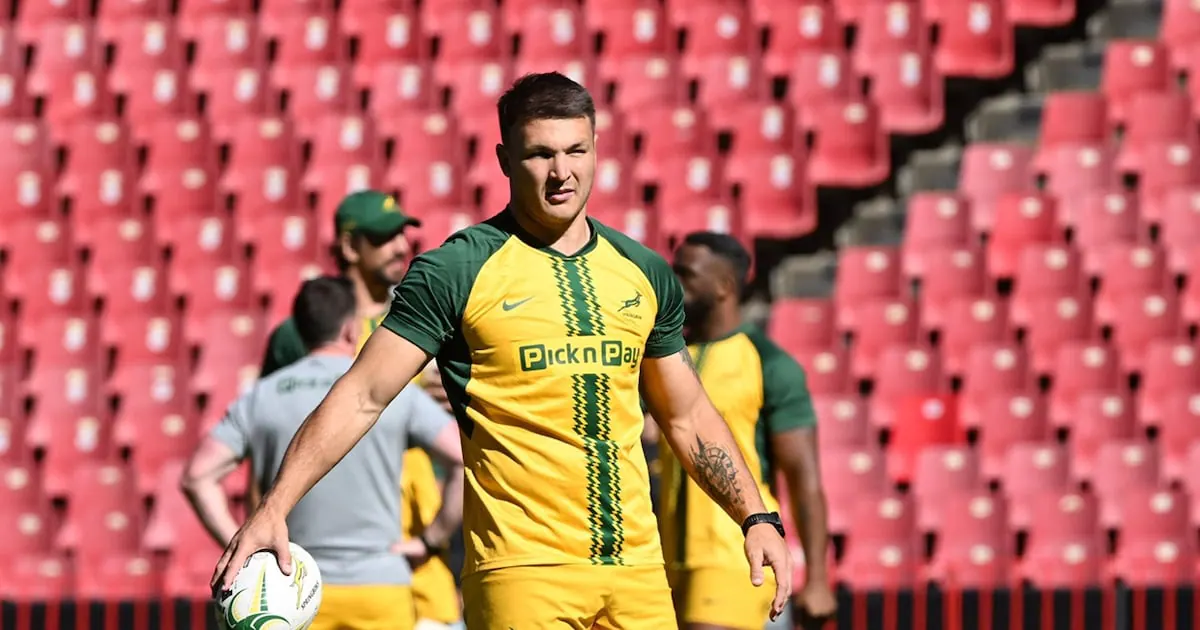
André Esterhuizen's appointment as Springbok captain against Australia in Perth was a decision that Rassie Erasmus got right, but the handling of everything around it was poorly executed. Esterhuizen, the inspirational Sharks skipper, had earned the honour through his leadership and performance. However, the teenager he was 14 years ago could not simply be wished away, hidden from questions or treated as somebody else's inconvenience.
In 2012, Esterhuizen was found guilty of directing a racial slur at Thabo Molete while playing schoolboy rugby at the age of 18. He received a one-year ban, suspended for six months on condition he completed a life-skills course, and was removed from the Leopards' Craven Week squad. This incident should not be sanitized or minimized as teenage banter, but rather acknowledged as wrong and punished as it was.
Equally, it is also important not to pretend that an 18-year-old must forever be imprisoned by the worst words he spoke as a schoolboy. Esterhuizen has built a 14-year professional life since that incident, playing for Harlequins in southwest London and later becoming the Sharks captain under JP Pietersen, a coach of colour and a Springboks World Cup winner.
The Springboks' leadership response to Esterhuizen's appointment as captain was disappointing, with the incident inevitably returning on social media and in the media. Erasmus and the Boks management should have anticipated this and addressed it immediately, rather than retreating into silence. This silence did not protect Esterhuizen, but instead left him exposed to the conclusion that nothing had changed.
The punishment Esterhuizen received was meant to correct the player and the person, not condemn them. If it worked, as Esterhuizen's subsequent life suggests it did, then rugby had a duty to show why discipline and education can matter so profoundly. Esterhuizen has shared a changing room with Siya Kolisi at the Sharks and at the Springboks, and has spoken about what he learned from Kolisi's leadership.
This was an opportunity for Esterhuizen to tell his story, share what he learned from the life-skills program, and explain how his view of South Africa and its people had changed. However, the Springboks' management prevented journalists from asking questions at press conferences before and after the Test match, thereby protecting nobody.
Erasmus's Springboks, inspired by Kolisi, have come to represent the best of South Africa's present and the possibility of its future. They are loved because their diversity is lived and not advertised. However, the Boks management's refusal to engage on Esterhuizen's past reinforced a narrative of convenient transformation that may not accurately reflect this team, Esterhuizen, or Erasmus.
Key points
- The Springboks' management was criticized for their handling of André Esterhuizen's captaincy appointment and failure to address his past incident.
- André Esterhuizen's past incident should not be forgotten, but his growth and redemption should be acknowledged.
- The Springboks' diversity and accountability demonstrate a positive change in South African rugby.