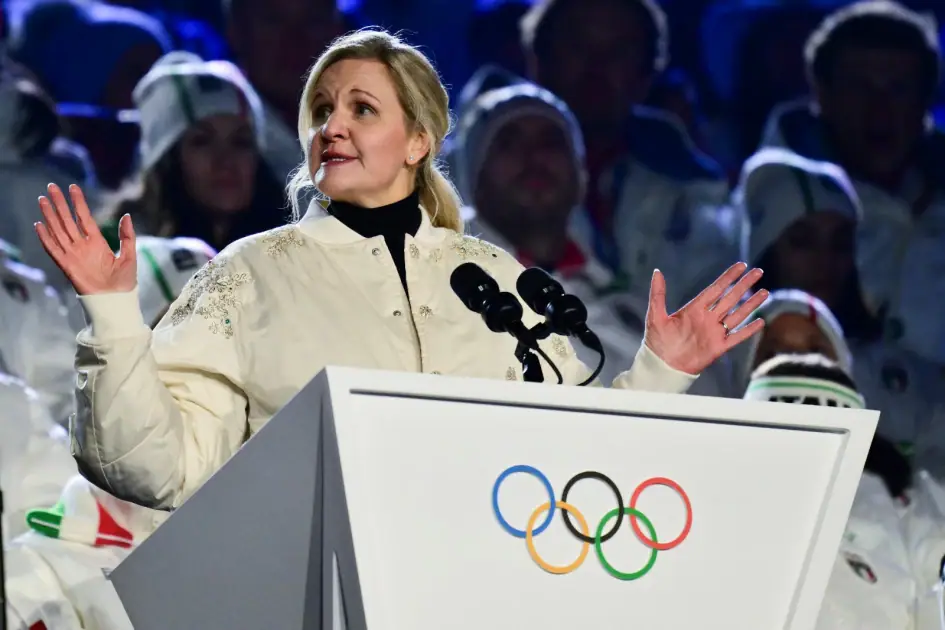
The International Olympic Committee (IOC) president, Kirsty Coventry, has expressed her desire to keep politics separate from sports, but her efforts may be put to the test as Ukrainian and Russian athletes compete together in the Youth Olympics in Dakar, Senegal. The 13 Russian athletes will be able to parade with their national flag and hear their national anthem, a first since the 2020 Winter Youth Games in Lausanne. Coventry, a Zimbabwean two-time Olympic swimming gold medallist, believes that athletes can only inspire if they are able to compete, and that sports should remain neutral ground.
However, Ukraine Sports Minister Matviy Bidnyi disagrees with Coventry's view, stating that any conversation about returning Russian athletes to the international arena can only happen after the war ends and a just peace is established. Bidnyi believes that isolation is not political, but a matter of basic human decency. The war between Ukraine and Russia was sparked by Russian President Vladimir Putin's invasion of Ukraine in 2022.
Former IOC marketing executive Terrence Burns believes that sports have never been separate from politics, and that the phrase "keeping sports neutral" sounds naive. Burns states that the real principle is neutrality, and that the Olympic movement only works if it stays independent of governments. He also notes that a boycott of sporting events can be effective if it is sustained, collective, and aimed at the wrongdoer.
The African boycott of the 1976 Montreal Games was effective in highlighting the issue of apartheid in South Africa. Burns and former IOC marketing chief Michael Payne agree that a boycott works when it is sustained and collective. Payne also notes that the boycott agenda of the 1980s nearly destroyed the Olympic movement, but that politicians eventually understood the importance of coming together through sports.
Payne believes that sports are again open to political interference, with politicians using sports as a tool to sanction countries. He argues that the growing political weaponization of sports is a threat to the future of sports. Burns and Payne also note that sports have occasionally been used to offer hope, such as when North and South Korea paraded together at the 2000 Sydney Games.
While Coventry has pursued a line of neutrality, other sports organizations have been accused of crossing the line. FIFA president Gianni Infantino has been criticized for his close friendship with US President Donald Trump and for awarding him the FIFA Peace Prize. Burns believes that this award was fake and changed the perception of FIFA from working with a political leader to endorsing one.
Infantino has also opened the gates to Russia, allowing them to compete in the Under-15 football World Cup. Bidnyi rejects this logic, stating that removing bans on Russia would send a terrifying signal to future aggressors. The issue of politics in sports remains a contentious one, with different opinions on how to navigate the complex relationship between sports and politics.
Key points
- IOC president Kirsty Coventry's push for neutrality in sports faces challenges as Ukraine and Russia compete side-by-side in the Youth Olympics.
- Ukraine Sports Minister Matviy Bidnyi disagrees with Coventry's view, stating that Russian athletes should not be allowed to compete until the war ends.
- Former IOC marketing executive Terrence Burns believes that sports have never been separate from politics, and that the phrase "keeping sports neutral" sounds naive.