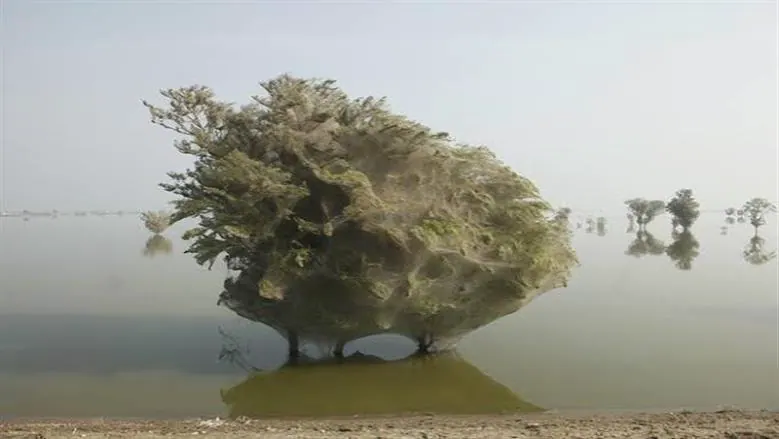
In a bizarre scene reminiscent of a movie, trees in Pakistan's Sindh region were enveloped in thick layers of spider webs following the devastating floods of 2010. The floods, which affected over 20 million people, caused widespread destruction and displacement. As the waters receded, they left behind vast areas of stagnant water, prompting a massive migration of spiders to the trees in search of dry and elevated areas.
The story began with the heavy monsoon rains that triggered the floods in Pakistan. As the waters took a long time to recede, they created an environment conducive to the proliferation of spiders. Millions of spiders took refuge in the trees, where they began spinning webs around the branches and leaves. Over time, the webs accumulated, covering the trees almost entirely, creating a surreal landscape.
Photographs taken by a relief worker in the Sindh region captured the unusual scene, showing trees covered in a white, translucent blanket of spider webs. The phenomenon was linked to the scale of the floods and the prolonged period of waterlogging, which provided a haven for millions of spiders in the affected areas. The spiders, including large numbers of small ones, adapted quickly to the harsh environmental conditions.
Interestingly, local residents observed a lower than expected number of mosquitoes in the area, despite the presence of stagnant water. While some reports suggested that the massive spider webs might have contributed to this decline, there was no conclusive scientific evidence to support this claim. The phenomenon, however, highlighted the resilience and adaptability of small creatures in the face of natural disasters.
The 2010 floods were one of the largest disasters to hit Pakistan, affecting over 20 million people and causing widespread destruction. The country's infrastructure and economy were severely impacted, with many communities left to pick up the pieces in the aftermath. The spider webs, while a striking visual phenomenon, also served as a reminder of the devastating consequences of the floods.
The images of trees covered in spider webs became one of the most enduring and unusual legacies of the 2010 floods in Pakistan. They provided a glimpse into the complex relationships between species and their environments, highlighting the ways in which small creatures can adapt and thrive in the face of adversity. The phenomenon also underscored the importance of understanding and mitigating the impacts of natural disasters on ecosystems.
According to National Geographic, the spiders' behavior of spinning webs around trees was a natural response to the floods, which provided a unique opportunity for scientists to study the adaptability of spiders in the face of environmental stressors. While the phenomenon was notable for its scale and visibility, it also served as a reminder of the intricate and often unexpected ways in which species interact with their environments.
Key points
- The 2010 floods in Pakistan led to a rare phenomenon where spider webs covered entire trees in the Sindh region.
- The floods affected over 20 million people and caused widespread destruction.
- The spider webs, while striking, also highlighted the resilience and adaptability of small creatures in the face of natural disasters.