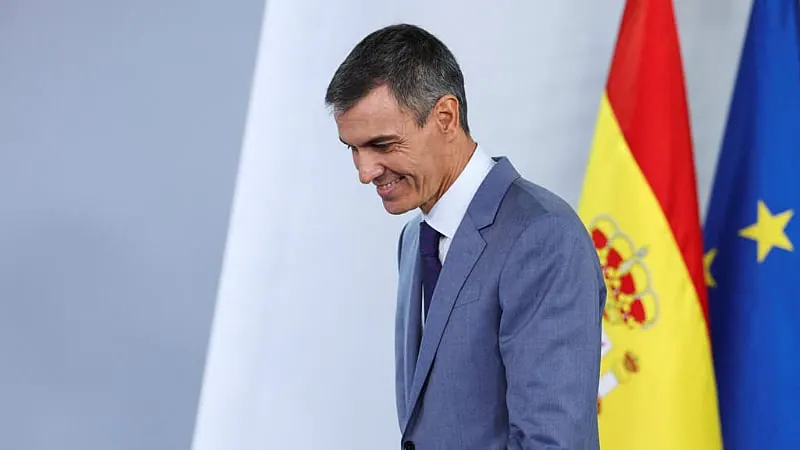
Spanish Prime Minister Pedro Sanchez has embarked on an election campaign for a snap vote on November 29, amid a backdrop of nationwide protests over the country's chronic housing crisis. The protests were sparked two weeks ago by the eviction of 87-year-old Madrid pensioner Maricarmen Abascal, who became the face of the crisis. Sanchez's left-wing coalition government had attempted to pass urgent decrees to address the issue but failed to do so in parliament, leading to the decision to call a snap election.
Sanchez, who has been in power since 2018, has gained international recognition for his clashes with US President Donald Trump and Israel, which have endeared him to global progressives. However, he is a divisive figure at home and trails in most polls to the main conservative Popular Party (PP). At his rally in Dos Hermanas, a historic Socialist stronghold, Sanchez vowed to strengthen legislation protecting tenants against "real estate speculation" if his party wins an absolute majority.
Sanchez chose Dos Hermanas, a commuter town outside Seville, as the symbolic location to kick off his electioneering. He had launched his 2023 election campaign from the same location and went on to retain office despite the PP winning more seats. Dos Hermanas was also the scene of Sanchez's political resurrection after he resigned as Socialist party leader in 2016 following two general election defeats.
The housing crisis has been a long-standing public concern in Spain, with hundreds of protesters camping in Madrid's Puerta del Sol square and other cities demanding more protection for tenants and affordable prices. The main unions have called a general strike for November 11, the first such stoppage in Spain since 2012, to crank up the pressure over housing and wages before the vote.
PP leader Alberto Nunez Feijoo was also rallying his followers on Saturday in Madrid, with his sights set on becoming prime minister after failing to form a government in 2023. Feijoo has focused his criticism on the government's handling of a migration crisis in Ceuta, where he held an event on Wednesday promising to restore normality. More than 70,000 migrants streamed into the Spanish north African enclave from neighbouring Morocco in late July.
Despite topping most polls, Feijoo is unlikely to achieve a majority, which could make far-right party Vox, parliament's third-largest force, a kingmaker in hypothetical coalition talks. Feijoo deserves "a chance", argued Ruben Moscoso, a 31-year-old public-sector worker at the rally, who wants to pull the country out of "ruin, corruption, and shady practices".
As Sanchez began his rally, Isabel Morales, a 67-year-old pensioner in the crowd, expressed her support for the prime minister, viewing his term in office as "very positive". Morales highlighted Sanchez's efforts to raise wages, pensions, and enact a housing law, which she believes are "extremely positive" for the working class. With the general strike looming and protests continuing, the outcome of the November 29 election remains uncertain.
Key points
- The snap election was called after Sanchez's government failed to pass measures to address the housing crisis in parliament.
- Sanchez trails in most polls to the main conservative Popular Party (PP) leader Alberto Nunez Feijoo.
- The main unions have called a general strike for November 11 to pressure the government over housing and wages.