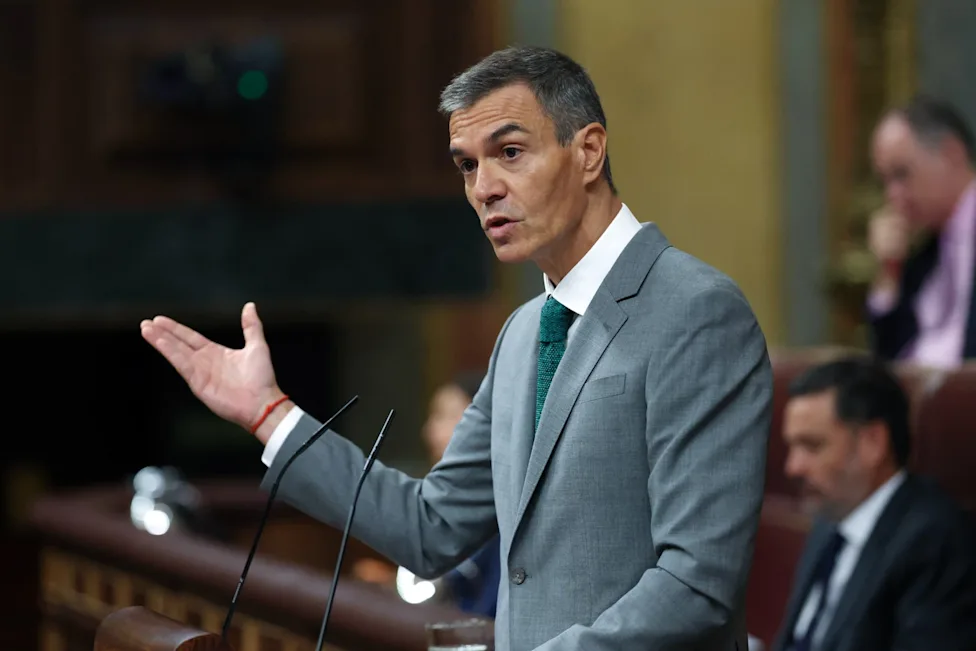
Spanish Prime Minister Pedro Sánchez has directly accused Morocco of failing to protect its borders, leading to a massive influx of migrants into the Spanish enclave of Ceuta on July 30. In an interview with CNN from New York, where he is attending the United Nations General Assembly, Sánchez pointed to the Moroccan government's inability to prevent the massive flow of migrants. He stated that his government has requested answers and actions from Morocco, as it is clear that their border control mechanism failed.
The incident on July 30 saw over 70,000 migrants cross into Ceuta, a Spanish enclave in Morocco, by swimming into the area. This unprecedented event put Spanish authorities in a challenging situation, as they struggled to cope with the massive influx of people. Sánchez's comments mark a significant shift in his government's stance on the issue, as they had previously avoided directly criticizing the Moroccan government.
Sánchez's change in tone comes after his government faced intense scrutiny over its handling of the crisis. The Spanish government had initially been cautious in its response, not wanting to jeopardize relations with Morocco. However, with the scale of the crisis becoming clear, Sánchez has now directly implicated Morocco in the failure to prevent the migrant influx.
The Spanish government is continuing its investigations into the circumstances surrounding the crisis. Sánchez noted that previously classified documents did not indicate that such a large-scale event was possible. The incident has put a strain on relations between Spain and Morocco, with Sánchez's government seeking answers on how the crisis was allowed to unfold.
Morocco and Spain have historically enjoyed good relations, with cooperation on issues such as trade and security. However, the Ceuta crisis has highlighted tensions between the two countries, particularly over issues of border control and migration. Sánchez's comments are likely to exacerbate these tensions, as Morocco faces pressure to improve its border control mechanisms.
The incident has also raised questions about the management of migration flows into Europe. The Ceuta crisis is not an isolated incident, as many European countries face challenges in managing their borders and responding to migrant flows. Sánchez's comments are likely to add to the ongoing debate about migration and border control in Europe.
The Spanish government is working to address the aftermath of the crisis, including providing support to the migrants who crossed into Ceuta. The incident has highlighted the need for greater cooperation between European countries and their neighbors to address the root causes of migration and develop effective border control mechanisms.
Key points
- Spanish Prime Minister Pedro Sánchez has directly accused Morocco of failing to protect its borders, leading to a massive influx of migrants into the Spanish enclave of Ceuta on July 30.
- The incident saw over 70,000 migrants cross into Ceuta, a Spanish enclave in Morocco, by swimming into the area.
- Sánchez's comments mark a significant shift in his government's stance on the issue, as they had previously avoided directly criticizing the Moroccan government.