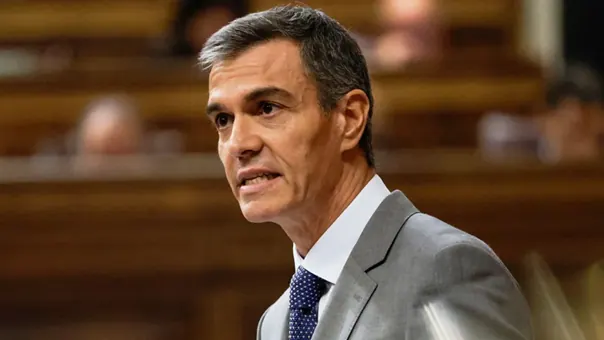
Spanish Prime Minister Pedro Sánchez has announced an early general election for November 29, 2026, amid growing pressure to address the country's housing crisis. The decision comes after parliament rejected two decree laws aimed at protecting tenants in the rental market. Sánchez's minority government has faced significant backlash, particularly after the eviction of an 87-year-old woman who could not afford a sharp rent increase, sparking nationwide protests.
The recent defeats on housing legislation have weakened Sánchez's leadership, with his party embroiled in numerous corruption scandals and facing criticism on cost-of-living issues and immigration. In a televised address, Sánchez acknowledged that his government had made mistakes and had not achieved everything it had set out to do. He emphasized the need for a broader progressive majority to push through reforms, particularly in areas such as inequality, public services, and access to housing.
Sánchez's left-wing coalition government, comprising his ruling Socialist party and the Sumar alliance, does not have a majority in parliament. The government was not due to hold a general election until the summer of 2027, but Sánchez has opted for a snap election to seek a fresh mandate. Since becoming prime minister in June 2018, Sánchez has relied on agreements with left-wing parties and support from Catalan and Basque nationalist and pro-independence groups to maintain power.
The opposition, led by the conservative People's Party, has welcomed the announcement, with leader Alberto Núñez Feijóo stating that Spaniards will finally be able to decide on the country's future. Feijóo has framed the election as a choice between "decline or change, lies or change, incompetence or change, division or change, corruption or change". Most opinion polls suggest that the conservatives are likely to emerge as the largest party in the next election, but would need the support of the hard-right Vox party to form a government.
The housing crisis has been a significant challenge for Sánchez's government, with tens of thousands of people taking to the streets in cities including Madrid, Valencia, and Barcelona to call for greater protections for tenants. The protests have highlighted the need for urgent reform, with many Spaniards struggling to afford rent increases and facing eviction. Sánchez has acknowledged that his government has not done enough to address the issue, and has pledged to prioritize housing reform in the lead-up to the election.
The early election has raised questions about the future of Sánchez's government and the direction of Spanish politics. The Prime Minister has faced criticism for his handling of various issues, including corruption scandals and the cost of living. Despite this, Sánchez remains a key figure in Spanish politics, having led the country since 2018. The election will be a crucial test of his leadership and the popularity of his policies.
The snap election has set Spain on a path of political uncertainty, with the outcome likely to have significant implications for the country's future. The election will determine the balance of power in parliament and the direction of Spanish politics for the next few years. As the campaign gets underway, Sánchez and other party leaders will need to articulate their visions for the country's future and convince voters to support their policies.
Key points
- Sánchez calls early election for November 29 amid housing crisis protests and defeats on legislation.
- The opposition, led by the People's Party, has welcomed the election, framing it as a choice between "decline or change".
- The housing crisis has been a significant challenge for Sánchez's government, with tens of thousands of people protesting in cities across Spain.