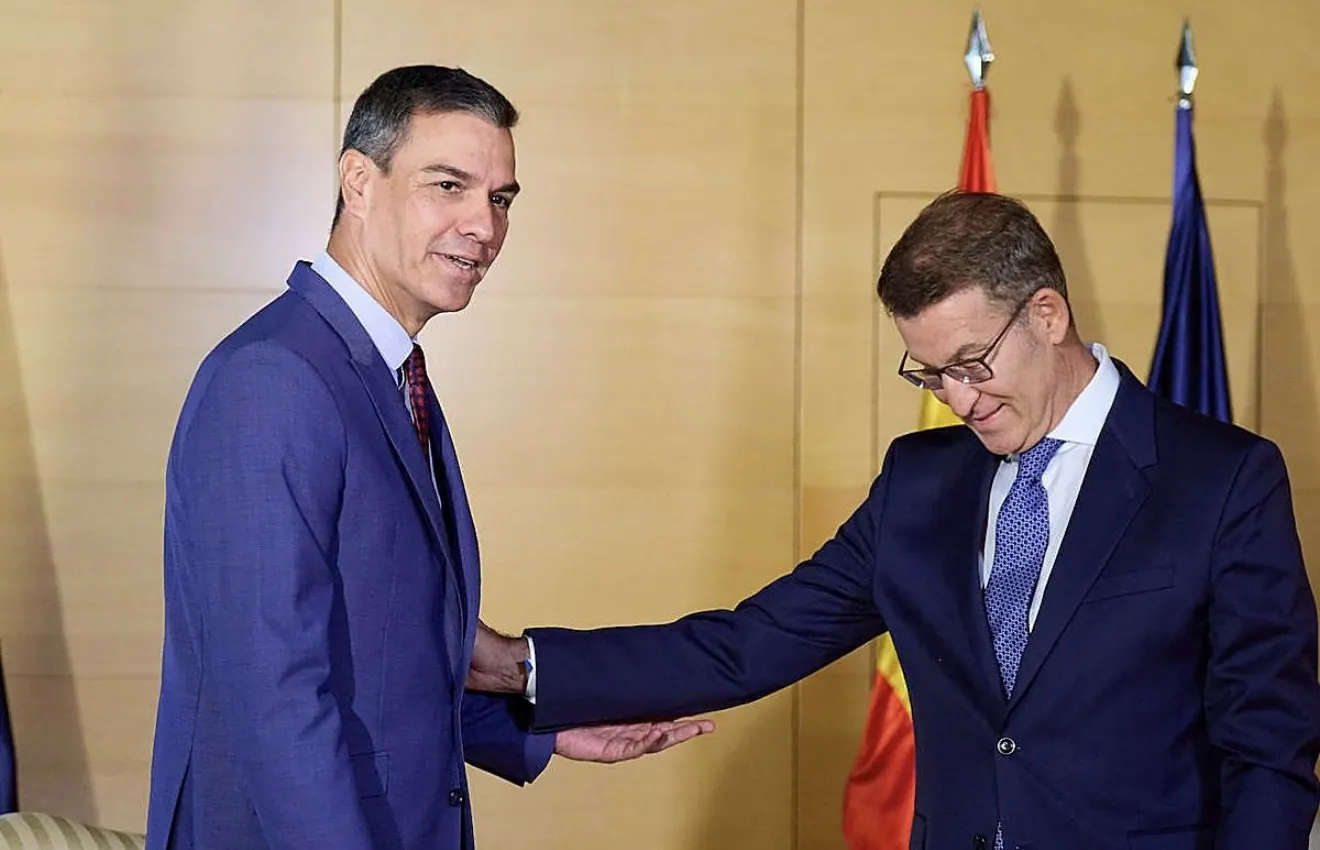
Spanish Prime Minister Pedro Sánchez has called for early general elections on November 29, 2026, due to the inability of his government to pass key decrees amid opposition from the People's Party, which holds a majority in parliament. This development has sparked interest in Morocco, given the potential implications for bilateral relations and the Western Sahara conflict.
Pre-election polls suggest a slight advantage for the right-wing parties, led by the People's Party and the far-right Vox party, over the left-wing parties, including the Spanish Socialist Workers' Party. The immigration issue has been a central concern in the election campaign, with the opposition criticizing Sánchez's government for its handling of the situation.
The potential victory of the right-wing parties in Spain has raised concerns in Morocco about a possible shift in Spain's stance on the Western Sahara conflict. However, analysts argue that the impact of a right-wing government on Morocco-Spain relations should not be overstated, given the complexities of Spanish politics and the existing agreements between the two countries.
The Western Sahara conflict has been a longstanding issue in Spanish politics, with various parties using it as a campaign tool to gain support. However, once in power, these parties have often failed to deliver on their promises, and the issue has become increasingly complex. The current agreement between Spain and Morocco, signed in 2021, provides a framework for cooperation on the issue.
A right-wing government in Spain would likely prioritize maintaining good relations with Morocco, given the strategic importance of their bilateral ties. Morocco and Spain have significant economic, cultural, and security interests, including cooperation on migration and counter-terrorism.
The experience of José María Aznar's government in Spain, which was in power from 1996 to 2004, provides a useful precedent for understanding the potential implications of a right-wing government on Morocco-Spain relations. During Aznar's tenure, relations between the two countries were strained due to various issues, including disputes over trade and security cooperation.
Despite these challenges, Morocco and Spain have maintained a strong partnership, and it is unlikely that a right-wing government in Spain would seek to undermine this relationship. The two countries have a shared interest in promoting stability and security in the region, and their cooperation on key issues is likely to continue.
Key points
- The outcome of the Spanish elections is likely to have significant implications for Morocco-Spain relations, particularly with regard to the Western Sahara conflict and bilateral cooperation on security and migration issues.