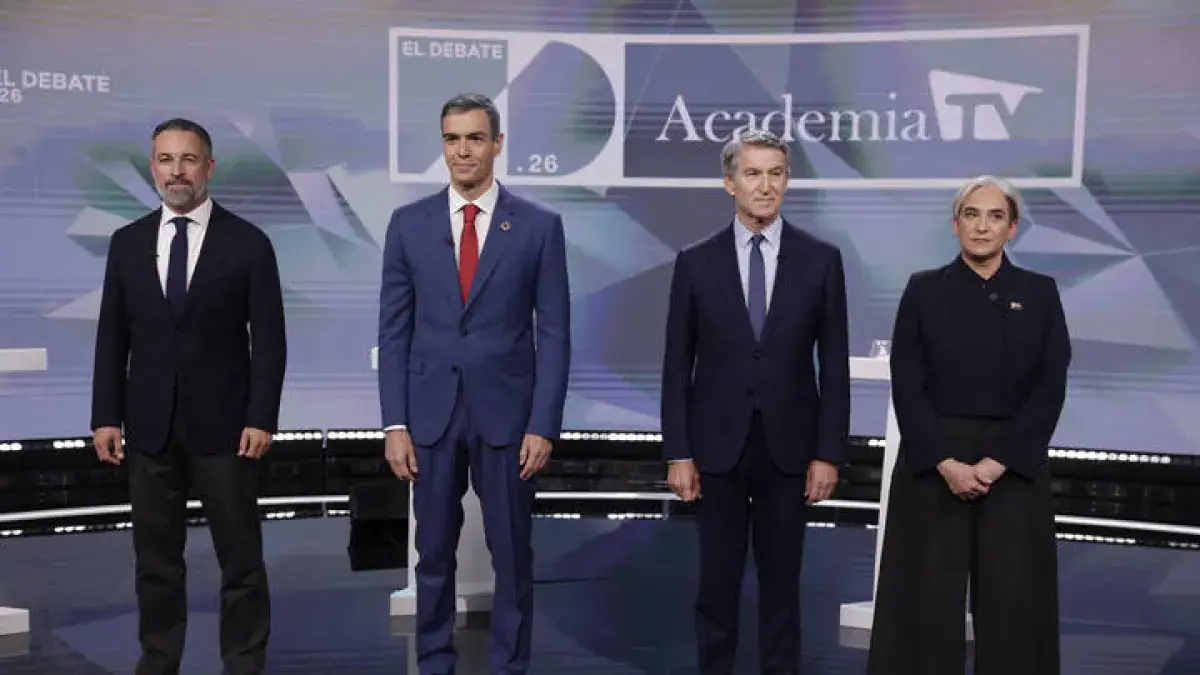
The final television debate of the Spanish election campaign took place on Thursday, featuring leaders from four major parties. Prime Minister Pedro Sánchez, Alberto Núñez Feijóo, Santiago Abascal, and Ada Colau discussed pressing issues like housing, women's rights, and economic policies. The debate, moderated by journalist María Casado, highlighted the deep divisions between the parties. Sánchez and Colau aligned on progressive policies, while Feijóo and Abascal pushed for change, criticizing the current government's record.
Sánchez defended his government's achievements, emphasizing the need to protect social rights and warning against a potential right-wing alliance. He criticized Feijóo and Abascal for their stance on key issues, accusing them of seeking to roll back progress made in recent years. The prime minister also faced criticism from Colau, who urged him to take a firmer stance on real estate speculation. The debate revealed stark contrasts between the parties, with Sánchez and Colau advocating for continued progressive policies and Feijóo and Abascal seeking a shift to the right.
Feijóo, leader of the People's Party, focused on the government's failures, promising to restore stability and credibility. He criticized Sánchez's economic management and proposed building one million housing units, as well as introducing tax cuts. Feijóo also clashed with Colau over the handling of a recent flood crisis in Valencia. His comments sparked reactions from Sánchez and Colau, who challenged his policies and leadership style.
Abascal, leader of the far-right Vox party, adopted a confrontational tone, criticizing Sánchez's government and advocating for a radical change in national policies. He focused on issues like immigration, security, and corruption, accusing the government of failing to address these challenges. Abascal's comments often sparked heated exchanges with Sánchez, who rejected the Vox leader's personal attacks.
Colau, candidate for the left-wing Sumar party, emphasized the need for more ambitious social policies, particularly in housing and women's rights. She criticized the current government's record and urged progressive forces to take responsibility for their shortcomings. Colau also challenged Feijóo and Abascal on their stance on women's rights, seeking to differentiate herself from both the prime minister and the right-wing leaders.
The debate highlighted the deep divisions between the parties, with Sánchez and Colau pushing for continued progressive policies and Feijóo and Abascal seeking a shift to the right. The leaders' exchanges often turned heated, with personal attacks and accusations flying back and forth. The debate comes just days before the election, in which voters will decide the future direction of Spain.
The outcome of the election remains uncertain, with multiple scenarios possible. Sánchez's Socialist Party and Colau's Sumar party are vying for support from progressive voters, while Feijóo's People's Party and Abascal's Vox party are seeking to capitalize on discontent with the current government. The debate has provided voters with a clearer understanding of the parties' positions, but the final decision will depend on the electorate's priorities and preferences.
Key points
- The Spanish election debate highlighted the country's pressing issues, including the housing crisis and women's rights.
- The leaders' exchanges often turned heated, with personal attacks and accusations flying back and forth.
- The outcome of the election remains uncertain, with multiple scenarios possible.