A devastating train collision occurred on Wednesday on the high-speed railway line connecting Madrid and Seville, killing at least 68 people and injuring more than 100 others. The collision involved a Renfe train and an Iryo train that had stopped, with preliminary findings pointing to a failure in the railway signalling system and possible human error at the control center. This tragedy has renewed concerns about railway safety in Spain, where another deadly train crash occurred earlier this year.
In response to the accident, over 1,000 people gathered outside Spain's Transport Ministry in Madrid on Wednesday evening to demand accountability. The protest, organized by far-right groups including Falange and Revuelta, called for Transport Minister Óscar Puente and Prime Minister Pedro Sánchez to resign. Demonstrators chanted slogans against the government, accusing officials of failing to ensure railway safety, and some carried Spanish and Franco-era flags.
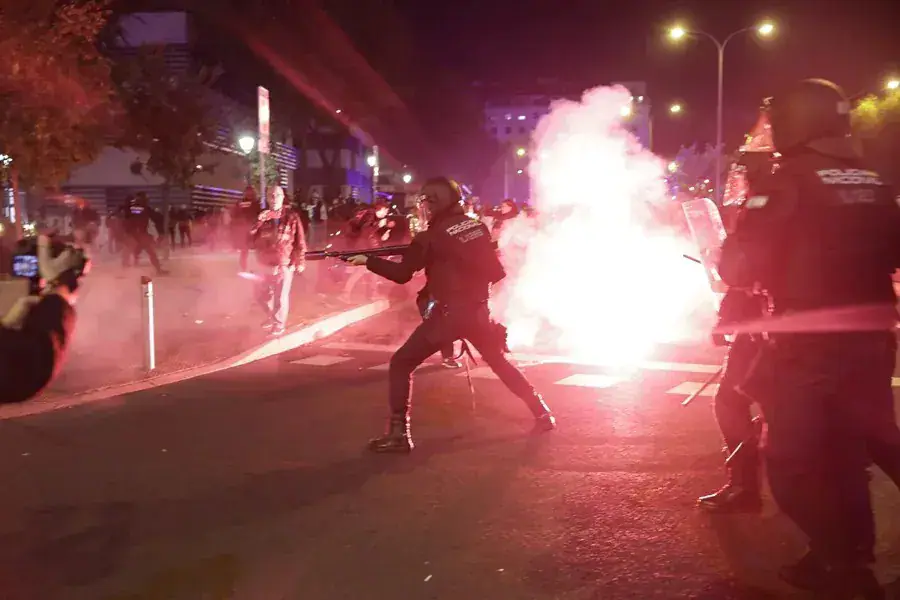
The protest turned violent after some demonstrators approached police lines, throwing flares and other objects. Police officers responded by charging at the crowd and using tear gas to disperse the gathering. Spanish news agency EFE reported the clashes, which resulted in injuries and arrests. The government has pledged a full investigation into the collision, while opposition figures have called for officials to explain what led to the disaster.
In a related development, Spanish train drivers began a 24-hour strike on Thursday to demand improvements in railway safety and the implementation of previously agreed measures. The SEMAF union had called the strike before Wednesday's collision but decided to maintain it despite the tragedy. The union expressed condolences to the victims and their families while awaiting verified information about the accident.
The strike has significantly disrupted rail services across Spain, including commuter trains in Madrid. Several lines faced suspensions and delays, while authorities introduced minimum service levels to limit the impact on passengers. The union is demanding better safety procedures, improved emergency protocols, more staff, and greater reliability of railway equipment.
Authorities have declared three days of national mourning for the victims as investigators work to establish the cause of the collision. Prime Minister Pedro Sánchez has promised a thorough investigation, and opposition figures are calling for accountability. The accident has raised concerns about the government's handling of railway safety and the need for urgent reforms.
The train collision has sparked widespread outrage and grief in Spain, with many calling for action to prevent such tragedies in the future. As investigations continue, the government faces pressure to address concerns about railway safety and take concrete steps to improve the country's rail network. The impact of the strike and the protests will likely be felt in the coming days.
Key points
- At least 68 people were killed in the train collision near Urda, in Toledo province.
- Over 1,000 people protested in Madrid demanding accountability for the train collision.
- Spanish train drivers began a 24-hour strike to demand improvements in railway safety and implementation of previously agreed measures.