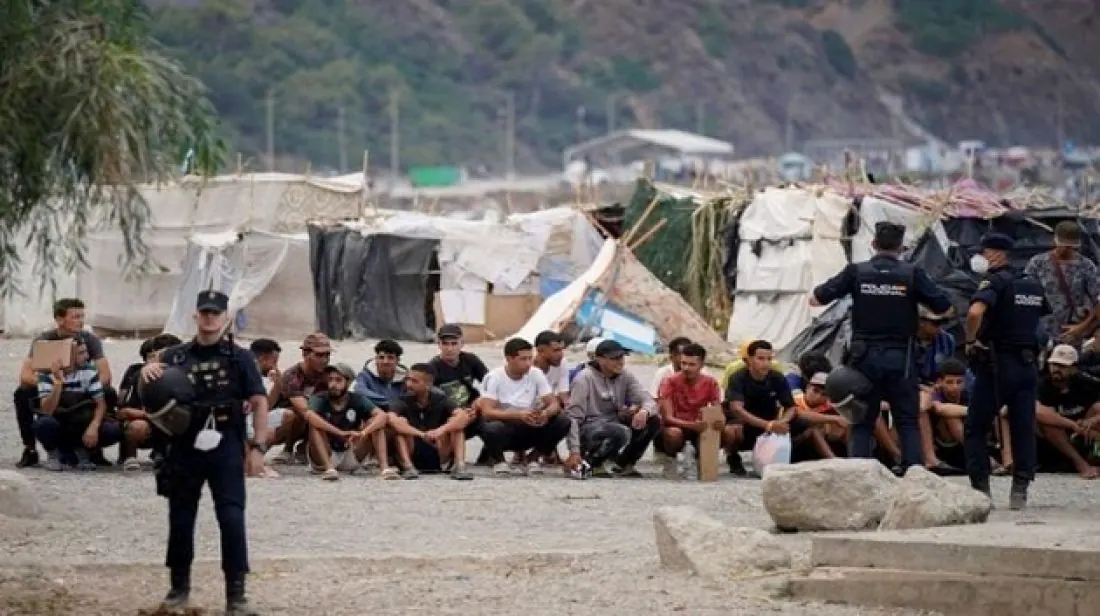
Spanish authorities have begun relocating hundreds of migrants from the beaches of Ceuta to a new camp in the port area of the enclave. The move comes after weeks of the migrants living on the beaches, with many facing harsh conditions. The new camp is expected to provide better living conditions, but its capacity has raised concerns. According to sources, the camp can accommodate up to 1700 people.
The relocation process was met with resistance from some migrants, who pushed and shoved to secure a spot in the new camp. Police accompanied the migrants on foot for over two kilometers to the port, trying to maintain order. The situation was tense, with some migrants reportedly unhappy with the new arrangements. The Spanish authorities have been working to address the migration crisis in Ceuta, which saw a surge of arrivals in July.
The migration crisis in Ceuta began in late July, when tens of thousands of migrants crossed the border from Morocco. While most returned quickly, several thousand remained, with many sleeping on the beaches. The local authorities estimate that around 13,000 migrants are currently in Ceuta, which has a total area of 18.5 square kilometers. However, the central government puts the number lower.
The Spanish government has faced criticism for its handling of the crisis, with some accusing Prime Minister Pedro Sanchez of not doing enough to address the situation. The government pushed ahead with the relocation plan despite opposition from local conservative authorities. The move has been seen as an attempt to alleviate the pressure on local resources and provide better living conditions for the migrants.
The new camp is part of a broader effort to manage the migration crisis in Ceuta. The Spanish authorities have been working to provide adequate housing and services for the migrants, while also trying to address the root causes of the crisis. The situation remains complex, with many migrants still living in precarious conditions. The government has faced pressure to do more to address the issue.
The migration crisis in Ceuta has also raised concerns about the impact on local resources and infrastructure. The enclave has a small population and limited resources, which have been strained by the large influx of migrants. The local authorities have called for more support from the central government to address the crisis. The situation is being closely monitored by human rights organizations and other stakeholders.
The relocation of migrants to the new camp is seen as a step towards resolving the crisis, but much work remains to be done. The Spanish authorities face the challenge of providing adequate housing and services for the migrants, while also addressing the root causes of the crisis. The situation in Ceuta remains a pressing concern for the Spanish government and the international community.
Key points
- The Spanish government has relocated hundreds of migrants from Ceuta beaches to a new camp amid controversy and chaos.
- The new camp has a capacity of 1700 people, but concerns remain about its ability to accommodate all the migrants.
- The migration crisis in Ceuta began in late July, with tens of thousands of migrants crossing the border from Morocco.