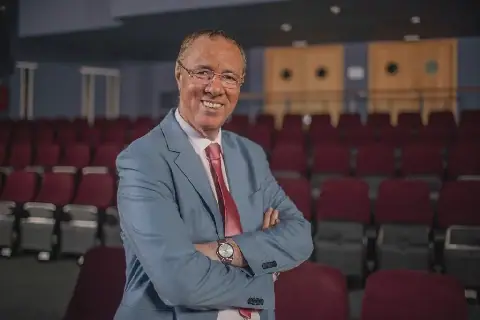
The Spanish Supreme Court has released James Chambers, a 41-year-old American businessman and heir to a media family, on conditional bail. Chambers was detained on July 10 in Ibiza, Spain, following a US request for extradition on charges including money laundering and providing financial support to Hamas, allegations he denies. The court's decision to grant bail was based on errors found in the extradition request, including inaccuracies in the Spanish translation of an FBI agent's testimony.
The US extradition request claims Chambers, also known as "Virgie," laundered $7.5 million, which was allegedly transferred from an American bank account to Tunisia. His wife, Stella Schnabel, told The Guardian that the Trump administration's accusations against her husband are "false" and that the US government has not provided clear evidence of his alleged wrongdoing. Chambers' case is the first known instance of the US seeking to extradite an American citizen on charges of providing support to Hamas.
As part of his conditional bail, Chambers must appear weekly at a local court, surrender his passport, remain in Spain, and provide a fixed address. He must also be available to appear before the Supreme Court if required. The court's decision to grant bail was influenced by "substantial and unintentional" errors in the translation of the FBI agent's testimony, which may delay the final ruling on the extradition request.
The case involves protests against an Israeli arms manufacturer, Elbit, which took place in late 2023. Two of the three charges against Chambers relate to these protests, which did not involve any incidents of arson, despite the translation error suggesting otherwise. The Supreme Court judges stated that the translation errors may delay the final judgment on the extradition request.
Chambers' wife expressed relief at the court's decision, stating that her husband's detention was unjust and that she is confident he will be cleared of all charges. The US government's efforts to extradite Chambers have raised concerns about the potential politicization of the case and the use of anti-terrorism laws to target individuals with alleged ties to Hamas.
The case has sparked debate about the limits of free speech and activism in the US and Europe, particularly in relation to the Israeli-Palestinian conflict. Chambers' supporters argue that his detention and extradition request are part of a broader crackdown on pro-Palestinian activism and that the US government's actions are motivated by a desire to suppress dissent.
The Spanish court's decision to release Chambers on bail has been seen as a significant development in the case, which will likely continue to attract attention from human rights groups and advocates for free speech. As the extradition process continues, Chambers' fate remains uncertain, and the case is likely to have implications for US-Europe relations and the global debate on terrorism and free speech.
Key points
- The Spanish Supreme Court released James Chambers on conditional bail due to errors in the US extradition request.
- The US seeks to extradite Chambers on charges of money laundering and providing financial support to Hamas.
- The case has sparked debate about free speech and activism in the US and Europe, particularly in relation to the Israeli-Palestinian conflict.