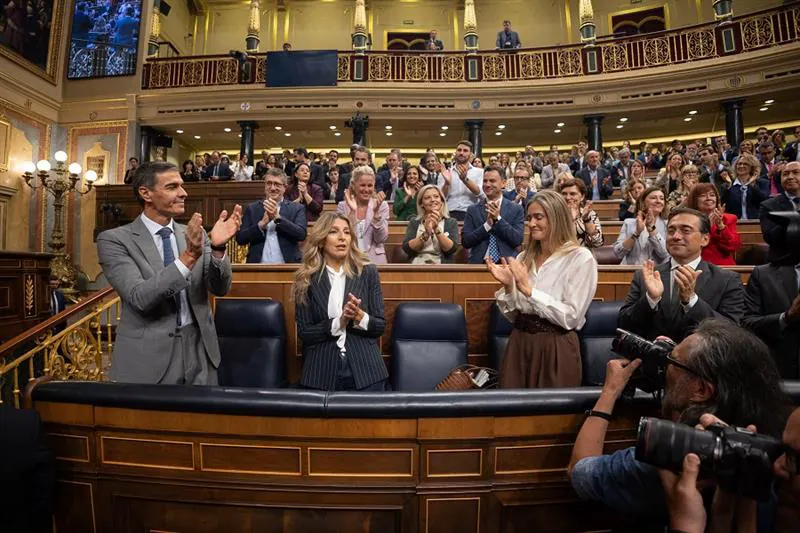
Spanish Prime Minister Pedro Sanchez has called a snap election for November 29, following the rejection of housing relief measures by parliament. The proposed measures, which included automatic renewal of tenancy contracts and restrictions on evicting vulnerable tenants, were voted down by opposition parties in Spain's parliament. This defeat marks another political setback for Sanchez, who has been in office since 2018 and is one of the few European prime ministers from the left still in power.
The rejection of the housing measures infuriated protesters who have been demonstrating against the country's increasingly expensive housing market. Tens of thousands of people marched in Madrid and other cities on Saturday, demanding affordable housing. The protests were sparked by the eviction of 87-year-old Maricarmen Abascal from her Madrid flat, where she had lived for decades. The event catalyzed long-running anger about runaway housing costs, with average rents in Spain almost doubling over the past decade.
Sanchez defended his government's record in a televised address, pointing out that under his leadership, Spain's economy has grown faster than those of its main European peers. However, he acknowledged that his government needs to renew and broaden its support to pass legislation. Sanchez aims to secure a much broader, progressive majority in parliament. Recent opinion polls have generally placed the main opposition conservative Popular Party (PP) ahead of the Socialists.
The housing crisis has been a top concern for Spaniards, with supply falling short of demand, leading to rising rents and house prices. The pensioner, Maricarmen Abascal, was forced to leave her flat after an investment company acquired it and sought to increase her rent by 275 percent. The backlash led the new owners to reach a deal allowing her to return to the flat at a low rent. The housing bills Sanchez's leftist coalition had presented to parliament were rejected after the Catalan separatist party Junts voted against them.
The head of the PP, Alberto Núñez Feijóo, had called on Sánchez to call an election, saying the country "can take no more." While polls put the PP ahead, they suggest the party would fall short of an absolute majority in parliament and would need the support of far-right Vox to govern. Sanchez's government has been operating under its 2023 budget, the last national spending plan passed by his government, for several years.
The situation has been further complicated by corruption scandals involving people close to Sanchez, including his wife and top figures in his Socialist Party. The prime minister has also faced criticism over his handling of the crisis in the North African enclave of Ceuta, where thousands of migrants from Morocco entered in late July. The events have fueled tensions and protests by residents calling for a return to normality.
Hundreds of protesters have been occupying a tent city set up in the heart of Madrid to press for reforms. The demonstrations have extended a crisis that has gone on for more than a week. Sanchez's aim is to secure a broader progressive majority in parliament to pass legislation and address the country's pressing issues, including the housing crisis.
Key points
- Spanish Prime Minister Pedro Sanchez calls snap election for November 29 after parliament rejects housing relief measures.
- The rejection of the housing measures infuriated protesters who have been demonstrating against the country's increasingly expensive housing market.
- Sanchez aims to secure a much broader, progressive majority in parliament to pass legislation and address the country's pressing issues.