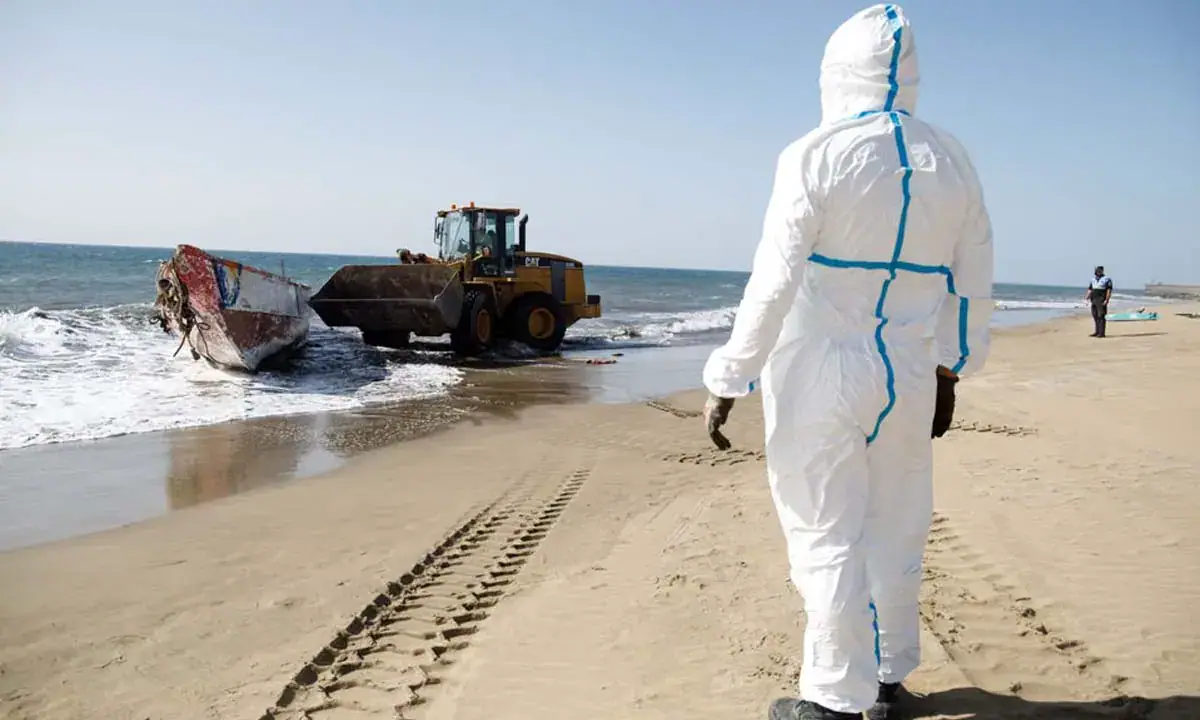
The Spanish government has declared a state of emergency in the Canary Islands due to a significant surge in migrant arrivals. The decision was made on November 10, following a meeting of the Joint Ministerial Committee for Migration. The emergency was declared in response to the increasing pressure on local reception, health, and transportation services. The committee, led by Minister of Territorial Policy and Democratic Memory Ángel Víctor Torres, included several ministers and Fernando Clavijo, President of the Canary Islands government.
The Spanish government has allocated €15.18 million to prepare additional reception centers for migrants and facilitate their transfer between islands and to the mainland. An additional €1 million will be used to enhance healthcare services and initial reception, including support for Red Cross teams and maritime rescue operations. The measures also include increasing human and security resources, supporting police and civil guard services, and providing translators to expedite identification and processing of migrant files.
The surge in migrant arrivals has been significant, with 7,432 people arriving in the Canary Islands between November 1 and 10. The island of El Hierro, particularly the port of La Restinga, has been a major point of entry. However, the island faces challenges in accommodating the influx due to its limited infrastructure and healthcare and logistical capabilities. According to the Spanish Minister of Territorial Policy, 92% of migrants arriving on the island come from sub-Saharan African countries, while around 8% come from the Arab Maghreb.
The situation has raised concerns among local authorities, particularly regarding the pressure on healthcare, transportation, and social services. The Canary Islands government has called for urgent intervention from the central government. In response, the Spanish government has emphasized the importance of cooperation with African countries, particularly Mauritania and Senegal, to address the root causes of migration.
The Spanish government has been engaged in diplomatic efforts with Mauritania and Senegal, including visits and contacts aimed at enhancing cooperation on border monitoring and combating migrant smuggling networks. Fernando Clavijo has announced that he will continue to lobby European institutions, calling for the activation of European solidarity mechanisms and increased presence of the European Border Protection Agency (Frontex) in countries of origin and transit.
The state of emergency in the Canary Islands is a response to the growing migration crisis in the region. The Spanish government has faced increasing pressure to address the issue, particularly from local authorities in the Canary Islands. The situation remains a challenge for the government, which must balance the need to provide humanitarian assistance with the need to manage the flow of migrants.
The migration crisis in the Canary Islands is part of a broader trend of migration to Spain. The country has seen an increase in migrant arrivals in recent years, with many people attempting to reach the mainland from North Africa. The Spanish government has implemented various measures to address the issue, including cooperation with African countries and increased security measures.
Key points
- The Spanish government has declared a state of emergency in the Canary Islands due to a surge in migrant arrivals.
- The emergency was declared in response to the increasing pressure on local reception, health, and transportation services.
- The Spanish government has allocated €16.18 million to address the crisis, including support for reception centers, healthcare services, and maritime rescue operations.
Reporting sources
- إسبانيا تُعلن حالة الطوارئ في جزر الكناري · tanja7.com