SpaceX has successfully recovered the upper stage of its massive Starship rocket for the first time, marking a significant achievement in the company's efforts to develop a fully reusable launch vehicle. The spacecraft returned to Earth after a 22-and-a-half-hour flight, hovering close to the Starbase launch tower in Boca Chica, Texas, before being secured by two giant mechanical arms known as 'chopsticks'. This successful recovery was met with loud cheers from SpaceX employees watching the operation at the launch site.
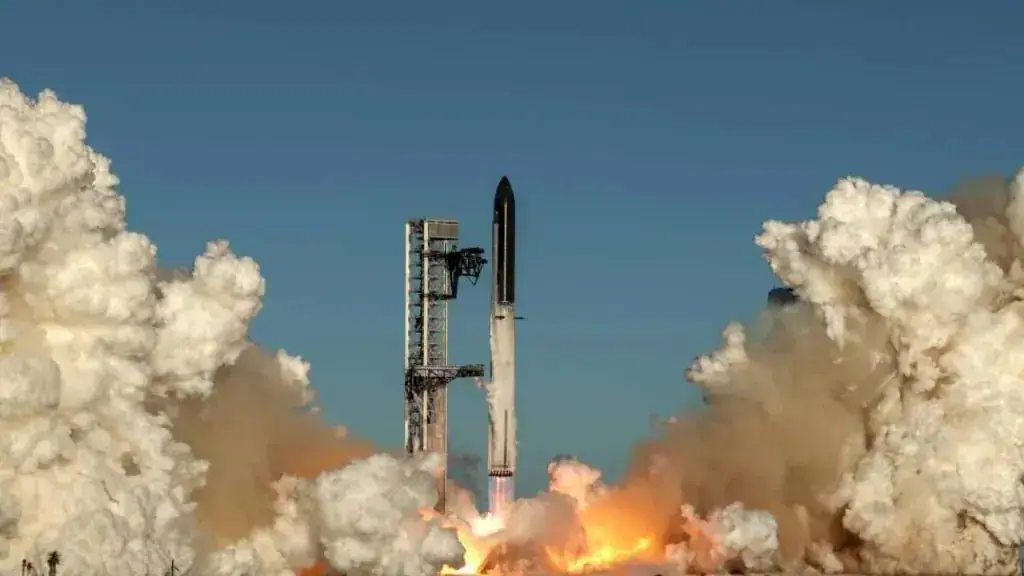
The 124-metre-tall (407ft) rocket lifted off from the Starbase launchpad at Boca Chica at 16:47 local time (19:47 GMT) on Friday. The launch marked the 15th Starship test flight and the first mission designed to demonstrate the recovery of both sections of the rocket. Under the original flight plan, SpaceX intended to catch the Super Heavy booster approximately six-and-a-half minutes after liftoff using the launch tower's mechanical arms.
However, the mission did not achieve a complete recovery as planned. SpaceX had also intended to retrieve the rocket's Super Heavy booster, the lower section responsible for lifting Starship off the ground, but an automated abort system prevented the manoeuvre. The booster was instead diverted towards the ocean, where it hovered above the water before exploding. SpaceX chief executive Elon Musk later attributed the failed recovery attempt to a fuel issue.
Despite the setback, the recovery of the upper section, known as the Ship, represents a significant achievement for the company, which has been working towards making both components of Starship reusable. The spacecraft successfully deployed 26 satellites intended for the Starlink constellation, which provides high-speed internet services. The spacecraft subsequently completed 14 orbits around Earth before returning to the launch site, where it was successfully caught by the tower.
SpaceX had previously demonstrated its ability to recover the Super Heavy booster during three earlier test flights. However, Friday's achievement was the first time the company successfully caught the upper stage, which only made it into orbit for the first time in September. Ahead of the mission, SpaceX had indicated that the decision to attempt the Ship's recovery would depend on an assessment of the spacecraft's condition while in space.
The outcome of the latest test is also significant for Nasa, which is relying on Starship's development as part of its plans to return astronauts to the Moon in 2028. The ambitious timeline means the space agency will be closely monitoring SpaceX's progress, particularly because the ability to recover and reuse Starship could influence the feasibility and cost of future lunar missions.
Prof Malcolm Macdonald, president of the Royal Aeronautical Society, described the successful recovery of the upper stage as an important achievement despite the failure to retrieve the booster. "Not recovering the first stage is a setback. But they have recovered Super Heavy before and so successfully returning and recovering the Ship is a substantial step forward," he added.
Key points
- SpaceX successfully recovered the upper stage of its Starship rocket for the first time.
- The mission did not achieve a complete recovery as planned due to a failed attempt to retrieve the Super Heavy booster.
- The successful recovery advances SpaceX's long-term ambition of building a rocket system capable of returning both stages safely to Earth and flying them again.
Reporting sources
- SpaceX successfully catches top of huge Starship rocket for the first time · Nigerian Tribune