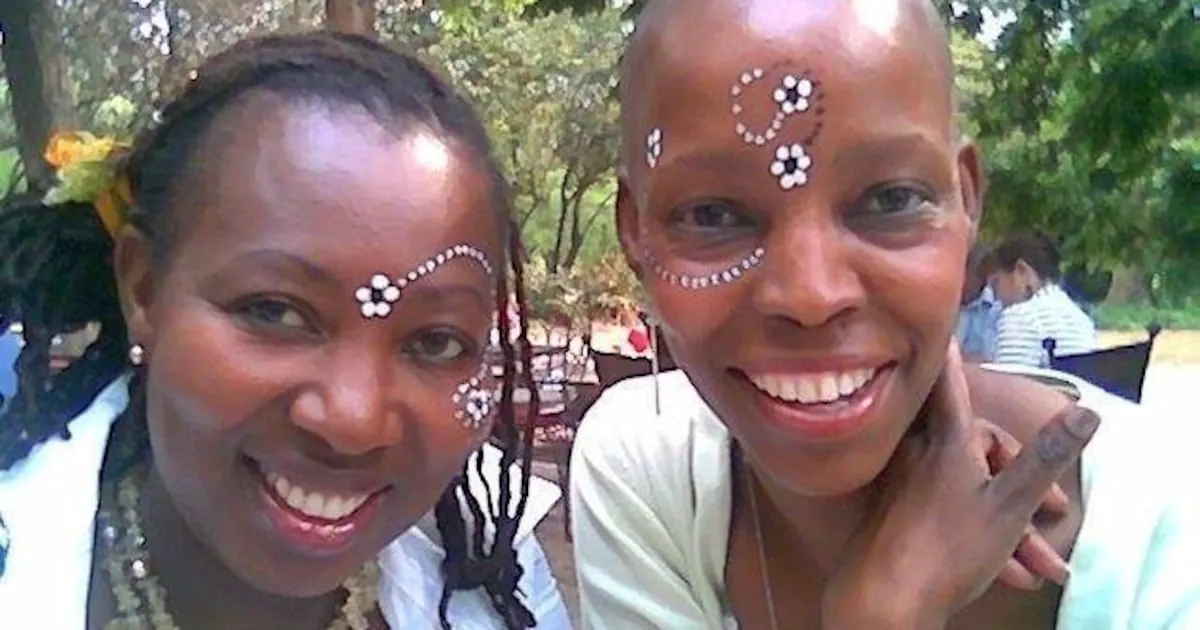
Kwanele Asante, a prominent voice for people living with noncommunicable diseases (NCDs) and mental health conditions, has spent years pushing local and global health institutions to listen to those whose wellbeing their policies are meant to serve. Asante's journey took her to the UN General Assembly in New York in September 2025, where she delivered the lived-experience address at a global meeting on NCDs and mental health. Her advocacy work focuses on ensuring that the voices of patients are heard in healthcare policy decisions.
Asante's personal experience with health challenges has driven her advocacy work. She was diagnosed with breast cancer 20 years ago and has since been in chronic treatment for chemotherapy-induced congestive heart failure, bipolar mood disorder, anxiety, and functional neurological disorder. Asante rejects the designation "breast cancer survivor," instead choosing to talk about her health in an all-encompassing way, highlighting that people experience the health system as a sum of their ailments, not defined by any one illness.
Born Anne Molebatsi Pooe in 1969 in Meadowlands, Soweto, Asante's life has been defined by healthcare. Her parents, Aaron Sonnyboy Pooe and Lerato Nokoane, met in a TB sanatorium, and her mother later took a job as a teacher at Batswana Teacher's Training College in Mahikeng to provide for Asante and her younger brother. Asante's early life was marked by poverty and instability, with her family being forced to move frequently due to her mother's job changes.
Asante's educational journey was also marked by challenges. She attended six schools by the time she reached matric, which she found destabilizing. However, she was taken in hand by her principal, ZK Mogodiri, at Pelotona Middle School in Mabopane, who helped her navigate her educational path. Asante's experiences in the Bantustans during the 1980s also shaped her perspective on healthcare and education.
Asante's mother, Lerato Nokoane, played a significant role in her life. After her parents divorced, her mother took a job as a teacher and later as a prison officer to provide for her family. Asante's mother was a tenacious woman who worked hard to ensure her children's well-being. Asante's experiences growing up in a poor household with a single mother have informed her advocacy work.
Asante's advocacy work has taken her to various platforms, including the UN General Assembly. Her message is clear: patients' voices must be heard in healthcare policy decisions. Asante's experiences with health challenges and her background in law and bioethics have equipped her to advocate for the rights of people living with NCDs and mental health conditions.
Despite facing new health challenges, including abdominal pain and surgery to remove an inflamed appendix, Asante remains committed to her advocacy work. Her story serves as a testament to the power of personal experience in driving positive change in healthcare policy. Asante's work continues to inspire others to advocate for the rights of patients and to push for a more inclusive and equitable healthcare system.
Key points
- Kwanele Asante, a South African lawyer and bioethicist, has become a prominent voice for people living with noncommunicable diseases and mental health conditions.
- Asante's personal experience with health challenges has driven her advocacy work, focusing on ensuring that patients' voices are heard in healthcare policy decisions.
- Asante's journey has taken her to the UN General Assembly, where she delivered the lived-experience address at a global meeting on NCDs and mental health.