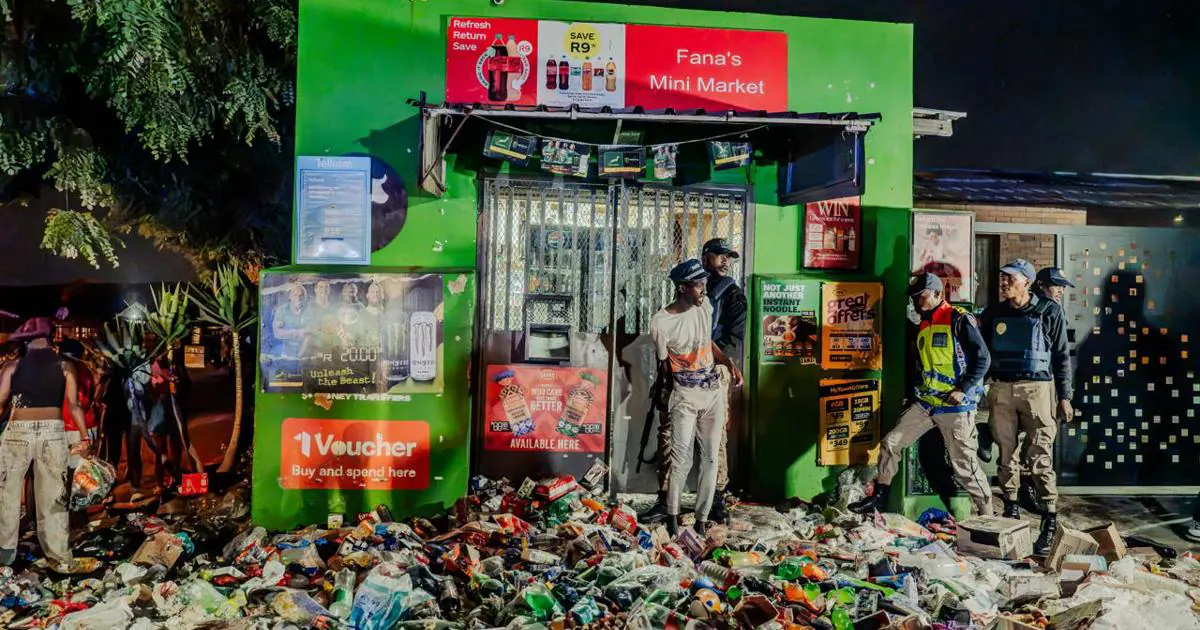
Residents and members of a political party demonstrated outside the Soweto Home Affairs office under a heightened police presence on October 9, 2026. The protesters are calling for more small-business opportunities and expressing frustration against illegal immigration, citing high crime and unemployment as major concerns. The demonstration was peaceful, with protesters dispersing after a few hours, some due to the heat and others heading to another protest in Johannesburg.
The protests in Soweto are linked to similar demonstrations that turned violent the previous day, resulting in 13 criminal cases. Residents, like Themba Tafane, pointed to foreign-owned shops on their street, expressing a desire to open their own businesses, such as spaza shops. Tafane and others believe that the government is giving alleged asylum-seekers permission to trade, which they see as unfair.
Mayor Dada Morero visited the area and informed that city officials have been assessing grant-funding applications for spaza shop businesses. The program, which started last year, has approved over 150 applications, with about 40 business owners receiving grants to stock their shops. Morero's statement suggests that the city is taking steps to support local businesses, but protesters seem to want more.
Some business owners in Soweto have removed stock from their shelves, fearing further demonstrations and potential damage to their properties. The anti-illegal immigration protests have spread to other areas, including Durban, where protesters vowed to make the city ungovernable. The situation remains volatile, with concerns about the impact on local businesses and communities.
The protests also follow the withdrawal of a directive by the Home Affairs department, which was overwhelmed by asylum seeker applications. The department's spokesperson, Schreiber, stated that the directive was withdrawn due to the high volume of applications. The situation highlights the complexities of addressing issues related to immigration and economic opportunities.
The anti-illegal immigration protests have sparked concerns about poor leadership and the need for the government to address the root causes of the unrest. MALAIKA MAHLATSI, a commentator, attributed the protests to poor leadership, while others have called for the government to introduce reforms to address the issues. The situation remains a challenge for the authorities, with calls for calm and dialogue.
As the situation in Soweto and other areas continues to unfold, residents and business owners are seeking solutions to the challenges posed by illegal immigration and economic opportunities. The city's efforts to support local businesses, such as the grant-funding program, may help alleviate some of the frustration, but more needs to be done to address the underlying issues.
Key points
- Residents and business owners in Soweto are demanding economic opportunities and support for local businesses amid anti-illegal immigration protests.
- The protests have spread to other areas, including Durban, and have sparked concerns about poor leadership and the need for government reform.
- The city has taken steps to support local businesses, including a grant-funding program for spaza shop owners, but more needs to be done to address the underlying issues.