The debate surrounding sovereignty and foreign criticisms has been sparked by leaders of Denmark, Iran, and South Africa, who claim that the US is bullying them by threatening their sovereignty. However, according to Shawn Hagedorn, an independent strategy adviser, this notion may be misguided. In modern constitutional democracies, sovereignty explicitly resides with the people, not the leaders. Therefore, national leaders who undermine the interests of their people cannot credibly label valid foreign criticisms as attacks on their country's sovereignty.
Hagedorn points out that the US constitution begins with "We the people," and South Africa's constitution with "We, the people of South Africa." This implies that the people, not the leaders, are the ultimate holders of sovereignty. The execution of thousands of Iranian protesters earlier in 2026 has discredited the Islamic Revolutionary Guard Corps' claims to legitimacy. In contrast, South Africa's pre-1994 government, which was broadly deemed illegitimate, was considerably less violent toward domestic dissidents.
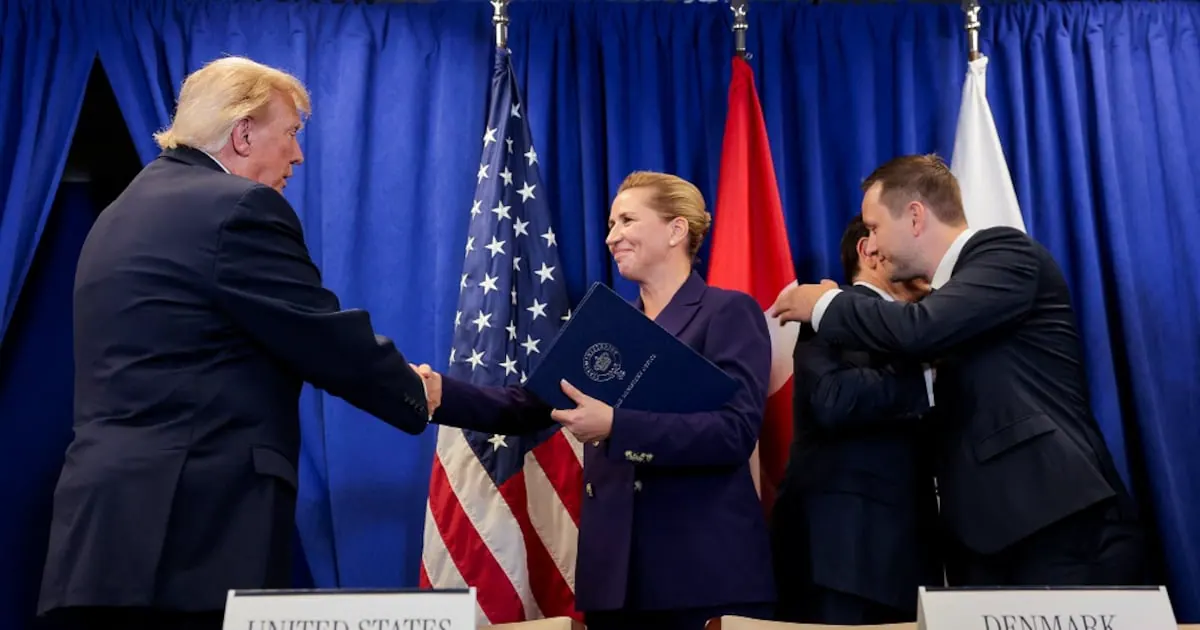
US President Donald Trump's taunts have distracted news outlets from outlining why new terms are necessary and mutually beneficial, according to Hagedorn. The issue of Greenland's defense is a case in point. Its leaders, along with those of Denmark and the EU, preferred to slow-walk renegotiating terms of US defenses of the world's largest island. This was despite Greenland's surging strategic relevance given the rising importance of Arctic sea routes, missile defenses, and rare earth minerals.
The negotiations over Greenland's defense were not about social justice or morality, but about Europe's provocative inattentiveness. Greenland's tiny population cannot secure its sovereignty claims on its own and might be persuaded to accommodate a small Chinese or Russian harbor development. Such projects have been central to both countries' incrementalist expansion strategies. Without a robust US security commitment, Greenlanders' sovereignty over the island could become as tenuous as Ukraine's sovereign claims over the Donbas.
Conversely, the recently signed agreement provides much-needed security benefits to the island's domestic residents, as well as European allies and Canada. Meanwhile, Russian and Iranian leaders' military adventurism devastates their people's economic prospects, and they also crimp food and energy supplies to Africa, Asia, and Europe. China's economic growth relies on expanding exports, which, largely through unfair trade practices, accelerate deindustrialization in other regions.
China dominates processing rare earth minerals and favors industrial overproduction at the expense of Chinese households. The US and Japan have generally been more responsive to China's threats, and European interests would be best served by aligning with those two key allies for a more robust response. If South Africa were to suddenly develop and competently pursue workable growth and job creation plans, it would still take many decades to achieve broad prosperity.
Hagedorn argues that South Africa's economic policies benefit the politically favored while entrenching rampant poverty alongside world-topping youth unemployment. Cosying up to Russia and Iran is detrimental to South Africa's general export prospects, and China's $1.2-trillion trade surplus grows through production subsidies that cause unaffordable job losses elsewhere. To create millions of jobs, South Africa requires sweeping reforms, including exempting value-added exporting from BEE and related regulations.
Key points
- National leaders who undermine the interests of their people cannot credibly label valid foreign criticisms as attacks on their country's sovereignty.
- The US and Japan have generally been more responsive to China's threats, and European interests would be best served by aligning with those two key allies for a more robust response.
- South Africa requires sweeping reforms, including exempting value-added exporting from BEE and related regulations, to create millions of jobs.