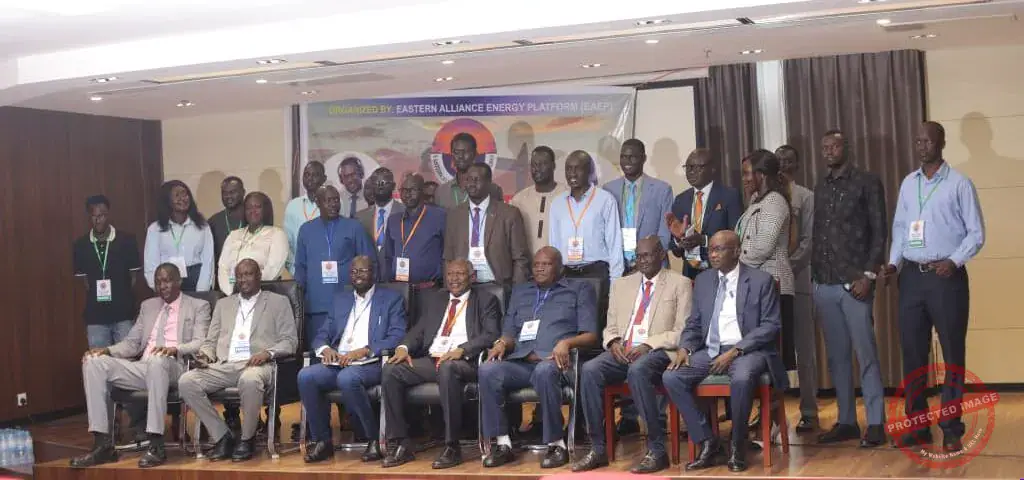
Stakeholders in South Sudan's oil sector have called for a balance between crude oil production and environmental protection. A roundtable discussion organized by the Eastern Alliance Energy Platform (EAEP) at Nilepet headquarters in Juba brought together civil society representatives, oil industry officials, and experts. The meeting focused on environmental challenges affecting communities around oil-producing areas and possible measures to address them. The discussion highlighted the need for stronger environmental protection and accountability in the oil sector.
Eng. Peter Manyang Mawut Atem of Climate and Environment Actions emphasized the importance of prioritizing environmental protection. He warned that poorly managed oil production could cause lasting damage to the environment. Manyang described oil as a non-renewable resource and stressed the importance of protecting the environment, which supports human life and livelihoods. He urged stakeholders to be cautious about the environment and take measures to prevent environmental damage.
The Greater Pioneer Operating Company (GPOC) has undertaken environmental and social assessments and is working with the government to monitor environmental impacts. Lin Pingjiang, Deputy Director of Health, Safety and Environment at GPOC, said the company began environmental and social assessment work in 2018 and started environmental audits in 2022. GPOC prioritizes environmental protection alongside safe and stable oil production and emphasizes cooperation with government institutions and local communities.
However, the discussion also highlighted the importance of ensuring that environmental monitoring translates into effective action. Communities have raised concerns about pollution and its potential effects on their health, water sources, and livelihoods. Dr. Jacob Dut, a policy expert, emphasized the need for effective enforcement of environmental laws and regulations. He argued that regulators should ensure that companies and individuals responsible for environmental pollution are held accountable under the law.
Dr. Dut noted that South Sudan already has a legal framework for environmental protection but argued that enforcement remains a major challenge. He said regulators should enforce penalties provided for under the law against those found responsible for environmental pollution. Dut's remarks underscored the need to move beyond the existence of environmental laws to effective enforcement, including appropriate penalties for proven violations.
The Eastern Alliance Energy Platform (EAEP) organized the roundtable discussion, which was hosted by Nilepet and held in partnership with the Ministry of Petroleum. EAEP promotes sustainable growth and greater national participation in the energy sector. Its work includes facilitating dialogue among industry stakeholders, supporting capacity-building for South Sudanese professionals and businesses, and advocating policies that can help the country benefit more sustainably from its natural resources.
As South Sudan continues to depend on oil revenues, the discussions highlighted the importance of ensuring that petroleum production is accompanied by effective environmental oversight, transparent monitoring, and accountability for any verified environmental harm. The country's reliance on oil revenues underscores the need for a balanced approach to oil production and environmental protection. Effective environmental oversight and accountability will be crucial in preventing environmental damage and promoting sustainable development.
Key points
- Stakeholders call for stronger environmental protection and accountability in South Sudan's oil sector
- Effective enforcement of environmental laws and regulations is crucial in preventing environmental damage
- Environmental protection and accountability are essential for sustainable development in South Sudan's oil sector