South Sudan has issued a call to international investors and African energy companies to explore opportunities in its largely unexplored oil and gas sector. The government is seeking partnerships to increase production, develop refineries, and invest in major energy infrastructure. With current oil production standing at around 170,000 barrels per day, the government aims to boost production to over 200,000 barrels within the next two to three years and ultimately reach 400,000 barrels per day.
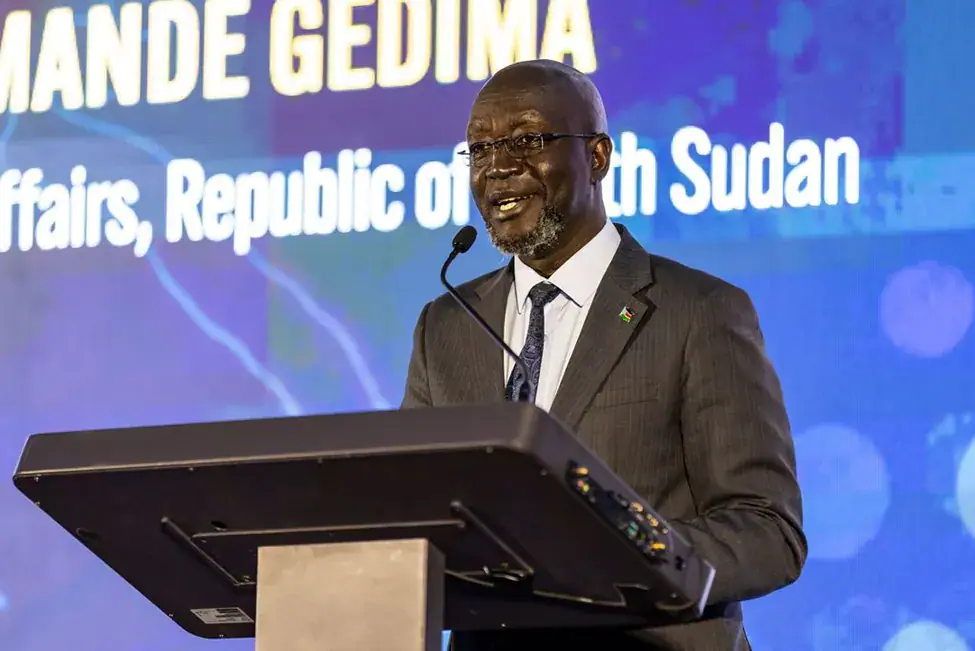
The 7th South Sudan Oil and Power Conference was officially opened in Juba, bringing together government officials, petroleum industry leaders, investors, and international partners to discuss the country's energy future. Africano Mande, caretaker Minister of Presidential Affairs, emphasized that the country's natural resources must translate into tangible benefits for citizens through employment, electricity, education, healthcare, and economic prosperity.
The government is seeking long-term partners rather than investors interested only in extracting the country's resources. Mande highlighted opportunities in oil and gas exploration, pipelines, domestic refineries, solar and hydropower projects, and regional energy interconnectivity. He stressed that investors should respect the laws and values of South Sudan, create jobs for the youth, protect the environment, and ensure that the dividends are shared equitably with the people.
Petroleum Minister Hon. Eng. Awow Daniel Chuang placed exploration and production growth at the centre of the investment agenda, revealing that more than 85 per cent of South Sudan's territory remains unexplored. He said 14 blocks are available for exploration licensing, and increasing production would require more than drilling new wells, including improving recovery from existing oilfields through modern technology and better reservoir management.
The minister highlighted cooperation with South African petroleum partners, including Sunpec, as an example of African countries working together to develop their resources. He also identified infrastructure and logistics as major obstacles to the sector's competitiveness, citing high logistics costs and the need for improved roads and regional transport networks.
The Undersecretary of the Ministry of Energy and Dams, Eng. Madhieu Achuil Madhieu, outlined a roadmap to increase national electricity access to 50 per cent by 2035. He said investment was needed in solar power, battery storage, hydropower, transmission lines, and distribution networks, including the proposed 1,080-megawatt Fula hydropower project and regional electricity connections with Uganda and Ethiopia.
The Executive Chairman of the African Energy Chamber, NJ Ayuk, urged South Sudan to raise its ambitions beyond 200,000 barrels per day, praising the country's partnership with South Africa and stressing that African cooperation must deliver practical results. He defended the development of African oil resources, arguing that the continent's energy poverty makes access to affordable and reliable energy an urgent priority.
Key points
- The government aims to boost oil production to 400,000 barrels per day.
- South Sudan has 14 blocks available for exploration licensing.
- The country seeks long-term partners to invest in its oil and gas sector.