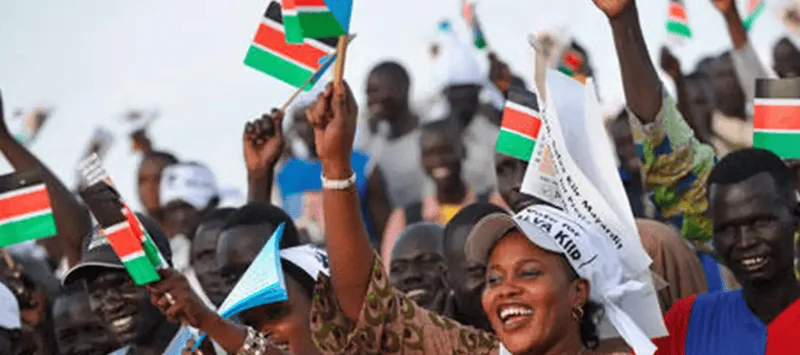
South Sudan has announced that its first general election since gaining independence in 2011 will take place on December 22, 2026. The election was declared after President Salva Kiir dissolved the transitional unity government on September 22 and installed a caretaker administration. This move has increased political tension in the country as preparations for the election are still lagging behind.
The country's political parties have been given a deadline to submit their manifestos and complete registration by October 22. Recently, 39 parties participated in a two-week Inter-Party Dialogue that concluded on October 7, where they discussed issues related to the election. Deputy rapporteur Albino Akol Atak stated that all parties agreed to adhere to the December 22 timeline, likening the election process to a train that cannot reverse.
Despite the agreement on the election date, there are concerns about the readiness of the electoral system. Opposition leader Changkuoth Bichok Reath emphasized the need for coordinated and inclusive action from national institutions, parties, security actors, and civil society to ensure a successful election. Journalist Denis Logonyi reported that ordinary citizens are worried about the lack of voter education, registration, and overall preparedness of the electoral system.
Minister of Cabinet Affairs Martin Elia Lomuro highlighted several challenges, including delayed funding, an unclear legal framework for the three administrative areas, and the need for security readiness throughout the election cycle. The unified security forces have not yet been fully deployed, which could pose a risk to the election process.
Analysts from Control Risks have warned that voter registration remains incomplete, security reforms under the 2018 peace deal are unfinished, and the main opposition leader Riek Machar remains under house arrest. These factors could undermine the legitimacy of the election. Furthermore, severe flooding, ongoing displacement, and food insecurity could make it difficult for some citizens to reach polling stations or register to vote.
The international community is closely watching the election preparations in South Sudan. The country's election process is seen as a crucial step towards consolidating democracy and stability. However, the challenges facing the election process have raised concerns about the country's ability to hold a free and fair election.
As the election date approaches, the country's electoral commission and other stakeholders will need to address the existing challenges to ensure a successful election. The commission will need to ensure that voter registration is completed, and that the electoral system is secure and transparent. The international community is expected to provide support to the election process, but it remains to be seen whether the election will be able to take place as scheduled.
Key points
- South Sudan faces significant challenges in preparing for its first post-independence election, including incomplete voter registration and unfinished security reforms.
- The country's election process is seen as a crucial step towards consolidating democracy and stability.
- The international community is closely watching the election preparations in South Sudan and is expected to provide support to the election process.