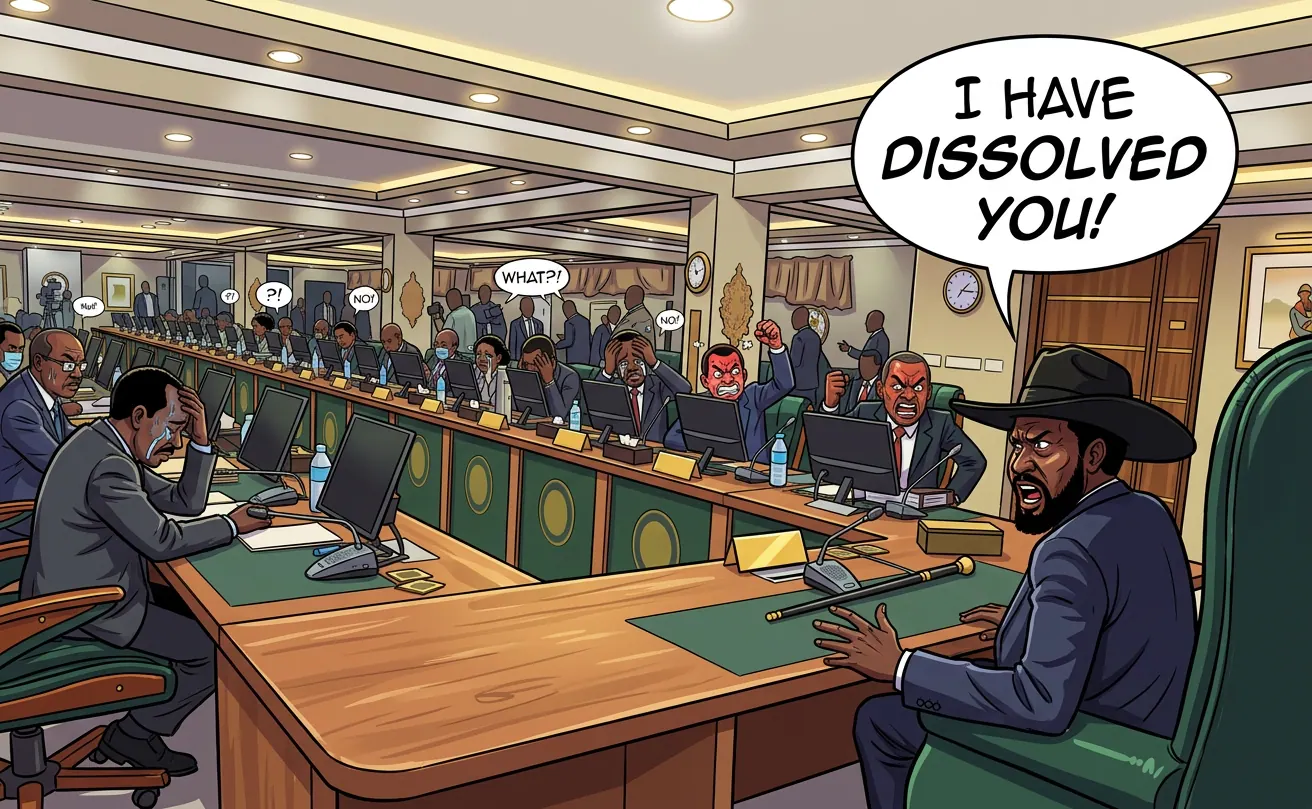
The dissolution of South Sudan's transitional government has sparked debate over whether the transition has been properly completed or simply bypassed. Mogga Loyo, in an opinion piece, argues that the transitional institutions have been displaced without resolving their unfinished responsibilities. Loyo's article distinguishes between ending an institution and completing its mandate, questioning the continuation of presidential authority and demanding accountability for outstanding commitments.
Loyo's concerns are in response to Juol Nhomngek Daniel's criticism of his original article. Nhomngek Daniel argued that dissolving the transitional government cannot substitute for implementing the peace agreement. The disagreement centers on the interpretation of Loyo's position, with Loyo asserting that explaining why an administration has been dismantled does not mean endorsing its dissolution. The central question remains whether South Sudan has completed its transition or bypassed it through a new administrative arrangement.
Three developments support Loyo's position: the limited practical resistance to institutional displacement, the ambiguity of international responses, and the growing separation of election preparations from unfinished transitional obligations. The September order removed the vice-presidents and dissolved national and state legislatures while retaining the president and establishing caretaker authorities. This substantial political change has become the machinery through which government operates, regardless of its constitutional justification.
The response of those displaced, including former officeholders, must be assessed through its institutional consequences. While some may have expressed objections, their silence should not be interpreted as consent. Former officeholders owe citizens more than statements about their removal; they should explain which obligations remained unfinished and how those responsibilities will now be protected. Without that accounting, the departure of leaders can overshadow the disappearance of the institutions through which citizens were promised reform.
International conduct deserves scrutiny, particularly regarding the African Union's Peace and Security Council's call for credible December elections while demanding inclusive dialogue, implementation of the peace agreement, security-sector reform, and transitional justice. The council's position combined electoral urgency with substantive conditions, which cannot be reduced to a demand for polling at any cost. International partners should explain publicly how their engagement with the caretaker authorities protects the obligations they previously supported.
The unfinished transitional agenda risks being pushed aside by the concentration on December elections. The reported amendment of electoral legislation separating the vote from completion of a permanent constitution and a national census changed the sequencing of the process without resolving underlying questions of representation, constitutional legitimacy, and public confidence. This development strengthens Loyo's warning that the transition appears to have been buried without proper accountability.
A practical roadmap is needed to connect constitutional responsibility with the reality of caretaker rule. The authorities should publish the complete legal record underlying the dissolution and explain how these measures relate to the constitutional framework and the peace agreement. An inclusive political dialogue should agree on the caretaker administration's mandate, limits, and duration, with participation from signatories, other political actors, women, young people, displaced communities, and civil society.
Key points
- The dissolution of South Sudan's transitional government has raised concerns about accountability and the completion of the transition.
- Critics argue that the transitional institutions have been displaced without resolving their unfinished responsibilities.
- A practical roadmap is needed to connect constitutional responsibility with the reality of caretaker rule in South Sudan.