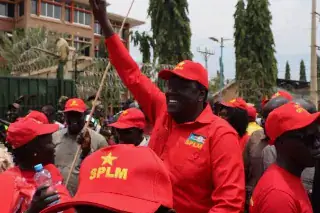
The death of General Joseph Lagu has brought attention to the passing of a generation that contributed significantly to South Sudan's liberation. The Sudan People's Liberation Movement (SPLM) paid tribute to Lagu for his role in unifying the Anyanya movement and helping to lay the groundwork for the 1972 Addis Ababa Agreement. This event has sparked reflection on the legacy of the liberation struggle and its connection to the current ruling party. The SPLM's leadership and its ability to transition authority to a new generation are being closely watched.
Within the SPLM, significant leadership changes have occurred in recent months. President Salva Kiir replaced James Wani Igga as the party's first deputy chairperson with Benjamin Bol Mel in May 2025. However, by November, Bol Mel had been removed, and Igga had returned to his previous position. These changes have raised questions about the party's stability and its ability to prepare for upcoming elections. The SPLM has defended the changes as a legitimate exercise of authority.
The SPLM's leadership summit in July 2026 brought together key figures, including Igga, deputy chairpersons Mary Apai Ayiga and Simon Kun Pouch, and Secretary-General Akol Paul Kordit. This gathering demonstrated the potential for veterans and newer leaders to work together. However, concerns remain about the level of authority party members have over leadership decisions. A credible process for choosing candidates would help determine whether members in the states and counties have a meaningful say in the party's future.
The SPLM enters the electoral period with significant advantages, including a familiar name, a national organization, and visibility as the governing party. However, its vulnerability stems from its history, and voters will judge the party based on its performance in government. The party's new leadership must provide clear answers to voters' concerns, particularly regarding issues like employment, displacement, and education.
The SPLM has announced plans for a national convention and primaries in the run-up to the elections. Clear nomination rules, meaningful participation by women and young people, and a credible appeals process would give members a stake in the outcome. When local branches can influence candidate selection, they have a stronger reason to answer to the communities they hope to represent.
The Reconstituted Joint Monitoring and Evaluation Commission (RJMEC) has warned that unresolved political disputes, incomplete security reforms, and stalled peace agreement commitments could undermine the credibility of the December elections. The SPLM's ability to address these concerns and ensure a free and fair electoral process will be crucial to its legitimacy.
The SPLM's future will depend on its ability to accept the public's verdict, even if it means losing power. The party's new leadership has an opportunity to give members a real voice in choosing candidates, present a program to the country, and defend citizens' right to vote for someone else. Ultimately, the party's credibility will be determined by its actions in the lead-up to and during the elections.
Key points
- The SPLM faces challenges ahead of the December elections, including internal leadership changes and credibility concerns.
- The party's new leadership must provide clear answers to voters' concerns and ensure a free and fair electoral process.
- The SPLM's ability to accept the public's verdict, even if it means losing power, will be crucial to its legitimacy.