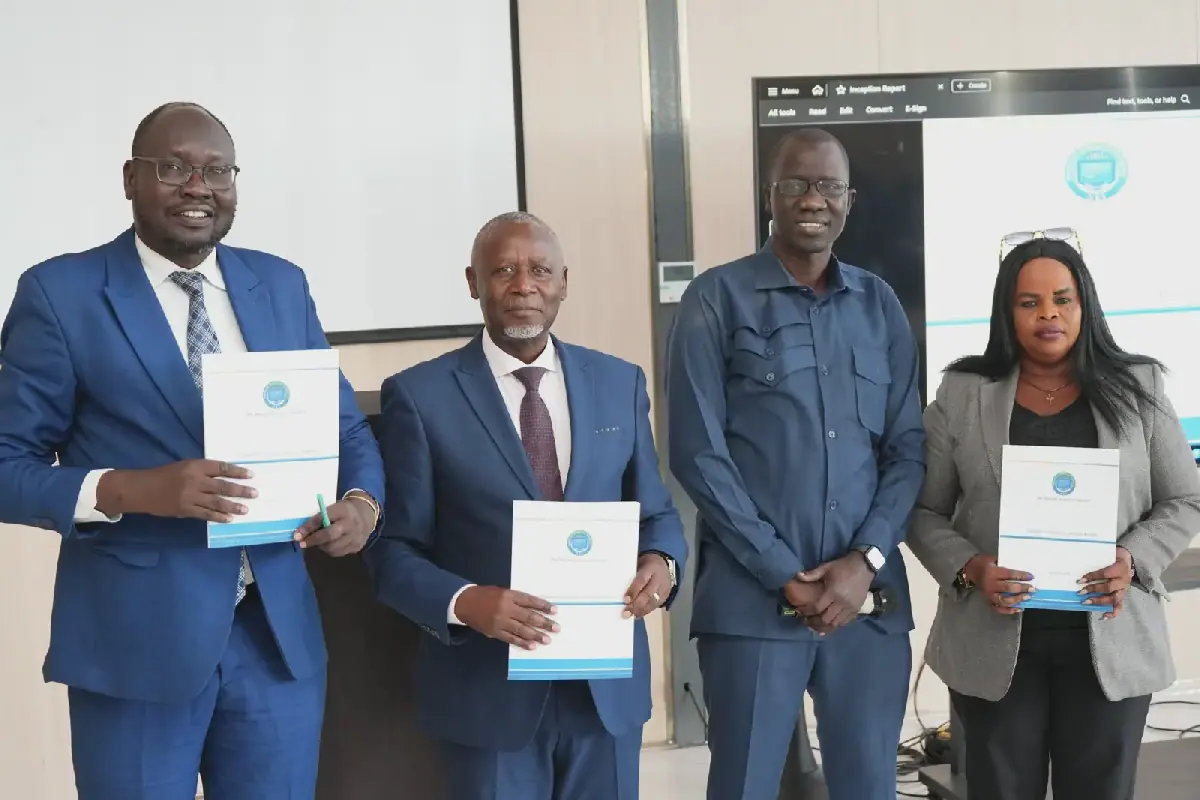
The National Bureau of Statistics (NBS) of South Sudan has released a report projecting the country's population to increase from 16.4 million in 2026 to 20.3 million by 2030. This growth is attributed to natural population increase and regional migration. The report, titled "Population Situation Analysis (PSA) 2026," was launched in Juba on Wednesday, October 29, 2026.
The PSA 2026 report draws on data from the 2021 Population Estimation Survey, the 2025 Multiple Indicator Cluster Survey, administrative records, and demographic projections. This comprehensive approach aims to provide a reliable evidence base for development planning, budgeting, and policymaking in South Sudan. The report highlights key demographic trends that will shape the country's future.
According to the NBS, approximately 47% of South Sudan's population is under 15 years old, while 79% is under 35. These statistics underscore the need for investments in education, healthcare, and employment opportunities for young people. The large youth population presents both challenges and opportunities for the country's development.
The report also projects that three states will account for more than 60% of net migration through 2030. Although the NBS did not specify which states these are, the projection emphasizes the need for targeted public services and resources in areas experiencing significant population movements. This information is crucial for planning and resource allocation.
Dr. Augustino Ting Mayai, director general of the NBS, stressed the importance of reliable population data for informed decision-making. He warned that planning without credible statistics risks being guided by assumptions rather than evidence. The NBS urged government institutions and stakeholders to use the report as the best available evidence until a new census is conducted.
Government agencies that attended the launch of the report pledged to incorporate its findings into their sectoral plans and national development frameworks. Development partners also welcomed the projections, seeing them as a tool to identify areas with the greatest need for services, including classrooms and humanitarian support. The report's findings are expected to inform development programs and humanitarian interventions.
The release of the population projections comes as South Sudan prepares for general elections scheduled for December 22, 2026. The country has not conducted a population and housing census since before independence, making the projections an essential tool for planning and resource allocation. The National Elections Commission will use the 2008 population census and 2010 constituency boundaries for the elections.
Key points
- South Sudan's population is projected to reach 20.3 million by 2030.
- The large youth population in South Sudan highlights the need for investments in education, healthcare, and employment opportunities.
- The report's findings will inform development planning, budgeting, and policymaking in South Sudan.