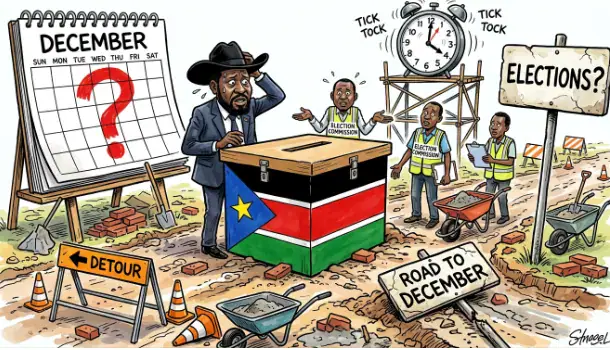
The National Elections Commission (NEC) in South Sudan is facing significant challenges in conducting the general elections scheduled for December 22, 2026. According to a legal opinion by Advocate Bullen Isaiah Kulang Mabbor Deng, the NEC may not be able to conduct the elections within the time frames required by the National Elections Act, 2012, as amended by the 2023 and 2026 Amendment Acts. The legal opinion highlights several concerns, including the publication of the voter register, nomination windows, and polling station notices.
The National Elections Act, 2012, as amended, sets out specific requirements for the NEC to conduct elections, including the publication of the voter register at least three months before polling. However, the NEC has missed this deadline, and as of early November, the commission itself stated that registration had not started, and no register existed. This is a critical issue, as every later stage of the electoral process depends on a verified register. The NEC's failure to publish the register has significant implications for the credibility and transparency of the elections.
The nomination windows for President, Governors, and legislative assembly members have also closed, according to the statutory arithmetic. The NEC is required to provide public notice for these windows, but no such notice was found. Without a lawful adjustment, these windows cannot be reopened by the NEC simply by announcing new dates. This has significant implications for the participation of candidates and parties in the elections. The NEC's actions, or lack thereof, may have serious consequences for the legitimacy of the electoral process.
The NEC is also required to notify voters of their polling stations at least 60 days before the election, which was due on October 23, 2026. However, the 3,161 centers identified by the NEC are registration centers, not polling stations. The commission's failure to meet this deadline raises concerns about the preparedness of the electoral process. The NEC's actions must be transparent and in line with the law to ensure the credibility of the elections.
The remaining period before the election cannot accommodate the Act's minimum steps, according to the legal opinion. If nominations were to open today, the Act's sequence would run roughly as follows: a seven-day window for nominations, publication of the nominee list, challenges, a Court decision, and publication of the final list. However, this assumes a completed register and ready regulations, neither of which exists on the record. The NEC faces significant challenges in meeting the legal requirements for the elections.
The 2026 Amendment Act has also raised concerns about internal inconsistencies and potential litigation. The Act's amendments to the Council of States nomination period are unclear, and the gazetted, consolidated text must be published and checked. Public reports state that the President signed the amendment on September 21, 2026, but the date entries in the assent block are irregular. The NEC must address these concerns to ensure the legitimacy of the electoral process.
In conclusion, the NEC faces significant challenges in conducting the December 2026 elections within the time frames required by law. The commission's failure to publish the voter register, missed nomination windows, and overdue polling station notices have raised concerns about the credibility and transparency of the elections. The NEC must take immediate action to address these concerns and ensure that the electoral process is conducted in a professional, credible, and transparent manner.
Key points
- The National Elections Commission may not meet legal requirements for December elections due to missed deadlines and internal inconsistencies in the 2026 Amendment Act.