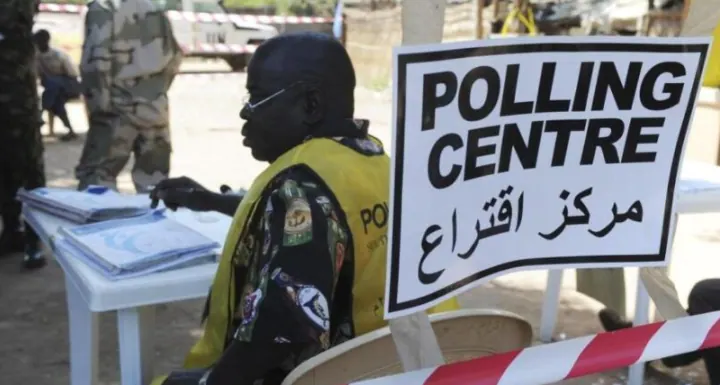
As South Sudan approaches December 22, 2026, a critical question arises about the country's electoral process. The core issue is whether the nation can organize an election that produces institutions citizens recognize as representative, accessible, and legally legitimate. The amended National Elections Act, assented to on September 21, 2026, aims to harmonize electoral law with the Transitional Constitution and empower the National Elections Commission (NEC) to conduct elections.
The amended electoral framework sets the National Legislative Assembly at 270 members, State Legislative Assemblies at 58 members each, and Administrative Area Councils at 20 councilors each. These structural shifts have significant implications for the country's representation. However, a smaller parliament does not automatically produce a better parliament, and policymakers must confront the question of who will be represented in the 270-member Parliament.
South Sudan's electoral framework has undergone significant changes over the past decade. The 2012 Elections Act established a 250-member National Legislative Assembly with 60% geographical representation, 25% women's representation, and 15% party lists. The 2023 Amendment expanded the Assembly to 332 members, reduced geographical representation to 50%, raised women's representation to 35%, and retained the 15% party-list allocation.
The current framework compresses the national legislature to 270 members, sparking concerns about representation. The allocation of these 270 seats cannot remain ambiguous, and the authenticated legislation and its implementing schedules must be published immediately. The discrepancy between the 332-member Assembly cited during the legislative process and the 270-member figure following presidential assent demonstrates the need for clarity.
Women's representation is a critical aspect of the electoral framework. The 35% affirmative-action provision for women introduced in the 2023 law must be implemented with mathematical precision under the new framework. However, the 270-seat Parliament introduces an arithmetic dilemma, and the NEC's implementing rules must explicitly state how the 35% fraction is converted into whole seats.
The representation of persons with disabilities is another critical issue. A proposal circulated during the 2023 legislative process advocated for a 2% seat allocation for persons with disabilities, but this was never codified into a standalone quota in the enacted 2023 law. South Sudan cannot afford to repeat this unresolved history in 2026, and policymakers owe the public a clear explanation of how meaningful participation will be guaranteed.
Accessibility and representation are often confused, but they are distinct concepts. Accessible polling stations and voter education are essential, but they do not solve the challenge of representation. A functional democracy requires both accessibility and representation, and the NEC has a critical role to play in ensuring that the electoral process is inclusive and representative.
Key points
- The amended National Elections Act aims to harmonize electoral law with the Transitional Constitution.
- The allocation of 270 seats in the National Legislative Assembly has significant implications for representation.
- The representation of women and persons with disabilities is a critical aspect of the electoral framework.