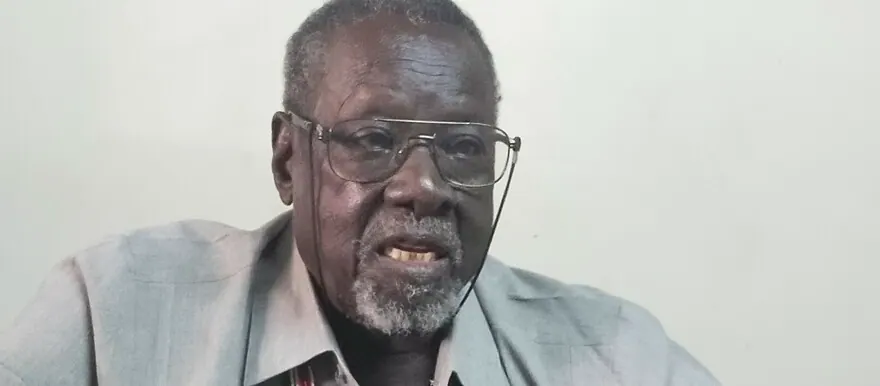
The Communist Party of South Sudan has expressed concerns that the ongoing inter-party dialogue in Juba is a government-controlled process that cannot provide a meaningful space to address the country's deepening political crisis. The two-week Inter-Party Political Dialogue began in Juba on 24 September, ahead of elections scheduled for 22 December.
Speaking at the dialogue in Juba, Joseph Wol Modest, Secretary-General of the Communist Party of South Sudan, said continued political tensions and judicial proceedings against former First Vice-President Riek Machar had further narrowed the space for meaningful political engagement. He emphasized that the Communist Party rejects a narrow, government-controlled dialogue whose outcome is effectively predetermined.
According to Wol, inclusive dialogue involves allowing people to speak openly about their concerns without being threatened or intimidated. He stated that the Communist Party recognizes elections as an extension of democratic government, but elections must be the outcome of a credible political and constitutional process, not a mechanism for ending the transition without resolving the woes that the right-wing community faces.
The Communist Party's concerns were echoed by other parties, including the SPLM-IO, which called for greater political and civic space ahead of the elections. Lasuba Lodoru Wango, deputy chairperson of the SPLM-IO interim leadership, said that registered political parties should not be required to obtain security clearance for meetings related to their parties in the elections.
Wango also emphasized the need for a transparent counting process and a conclusion of results with all political members present. He stated that the dialogue should produce a written, implementable, and time-bound roadmap to make the planned elections locally and operationally credible.
Other parties, such as the Democratic Change Party (DC), cautioned against holding elections before the necessary conditions are in place. Onyoti Adigo Nyikwec, chairman of the DC, emphasized the need for a credible election and encouraged critical thinking about the type of election needed in the current environment.
Bishop Elias Taban Parangi, chief mediator of the Inter-Party Dialogue, stated that the mediation team would support political parties in finding their own solutions rather than imposing decisions on them. He attributed South Sudan's recurring conflicts to mediators who imposed agreements without adequately considering the concerns and circumstances of the country's people.
Key points
- The Communist Party of South Sudan criticizes the inter-party dialogue as government-controlled.
- The dialogue aims to address the country's deepening political crisis ahead of elections scheduled for 22 December.
- Parties emphasize the need for a credible and inclusive electoral process.