The government of South Sudan has assured that it will not forcibly evict communities living inside protected national parks. Instead, it will engage in negotiations with them before considering relocation. This clarification comes as the Ministry of Wildlife Conservation and Tourism develops guidelines to address the expansion of settlements into the country's six national parks. The proposed framework emphasizes community consultations, negotiations, and possible relocation.
According to Martin Ring Malek, assistant director general for administration and finance at the Ministry of Wildlife Conservation and Tourism, the government will involve affected communities in finding solutions to settlements that have expanded into protected areas during years of conflict. The authorities will first establish the boundaries of protected areas and verify whether communities occupying the land have legitimate historical claims. Residents claiming to have inherited land before the establishment of national parks will be required to provide evidence to support their claims.
The verification exercise will involve multiple government ministries, including Wildlife Conservation and Tourism, Lands, Housing and Urban Development, and Environment and Forestry, as well as the Land Commission. The Land Commission will provide land ownership documents and maps to help determine whether disputed areas are public, private, or community land. This multi-agency approach aims to ensure that decisions are well-informed and fair.
The proposed National Protected Area Demarcation Guidance is intended to strengthen the management and protection of gazetted national parks and reserves across South Sudan. The country has six national parks: Badingilo, Boma, Lantoto, Nimule, Shambe, and Southern National Park. These parks are complemented by a network of game reserves that protect the country's savannahs, wetlands, and wildlife migration routes.
David Geng Kech, coordinator of the Land Reform Unit at the Ministry of Lands, Housing and Urban Development, highlights the importance of wildlife conservation in national land use planning. He notes that protected areas contribute significantly to the economy, particularly through tourism. Kech welcomes the validation workshop, saying it provides an opportunity for government institutions to coordinate their efforts on the proposed guidelines.
Joseph Kulang Akech, director of research and planning at the Ministry of Environment and Forestry, also supports the initiative. He describes protected areas as important ecological sites that require stronger conservation measures. Akech emphasizes that protecting these areas will help preserve South Sudan's natural and cultural heritage for future generations. He urges communities expected to participate in consultations to support the initiative.
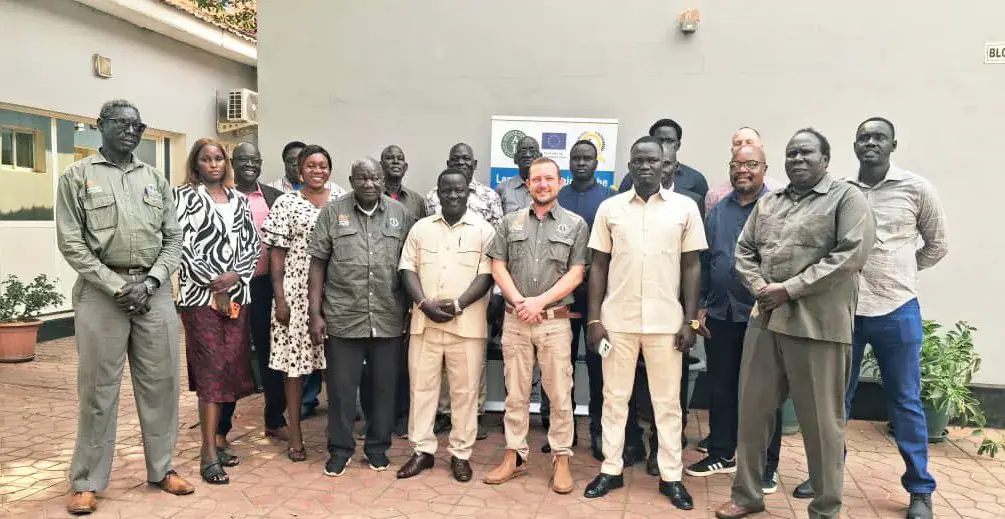
The validation workshop, supported by African Parks, brought together government experts, regional practitioners, and other stakeholders to review the proposed guidelines. Discussions focused on stakeholder engagement, institutional coordination, physical demarcation procedures, and mechanisms for addressing community grievances and resolving disputes. The officials agree that cooperation and coordination among government institutions are crucial for effective land use management and conservation.
Key points
- The government will negotiate with communities living in national parks before relocating them.
- The proposed guidelines aim to strengthen the management and protection of gazetted national parks and reserves across South Sudan.
- The verification exercise will involve multiple government ministries and the Land Commission to ensure fair and informed decisions.