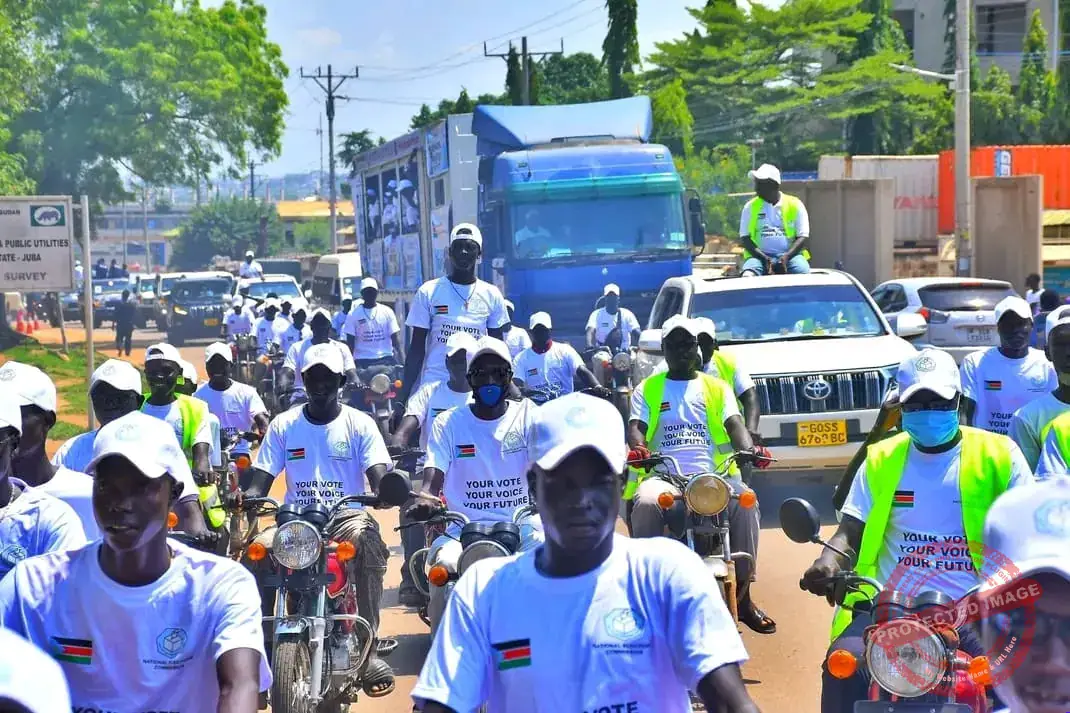
A new public survey conducted in South Sudan has found that a significant majority of respondents support holding elections in the country by December 2026. The survey, titled Trends in Civic Space and Elections in South Sudan: Findings from the Seventh Round of the Public Perceptions of Peace Survey, gathered responses from 4,530 individuals across 15 counties, with additional reporting in displacement camps. The findings indicate that 78.8% of respondents want elections to take place by December 2026, showing an increase from 76.9% in 2025.
The survey, funded by the European Union and conducted between February and April and August and September 2026, also found that the proportion of respondents who believe South Sudan is ready for elections increased from 61.3% in 2025 to 65% in 2026. However, this figure remains below the 73.3% recorded in 2024. The survey authors, David Deng, Christopher Oringa, and Jan Pospisil, noted that support for holding elections as scheduled in December 2026 also rose from 67.2% in 2025 to 73.2% this year.
Despite the strong support for elections, the survey revealed concerns about civic freedoms, with almost half of respondents saying they felt unsafe or very unsafe speaking publicly about politically sensitive issues. In 2026, 49.9% expressed those concerns, compared with 50.9% in 2025 and 46% in 2024. Only 35.1% said they felt safe or very safe expressing their political views publicly, while 15% remained neutral. The survey covered respondents across 10 states and the Greater Pibor Administrative Area.
The survey also found differing views on whether outstanding transitional tasks should be completed before elections. Some 68.1% of respondents said a permanent constitution should be adopted before voting, while 61.3% agreed with the December 2025 decision to postpone constitution-making and the census to prioritise elections. On the conditions that could justify postponing the vote, 54.1% cited the return of internally displaced people and refugees to their homes.
The survey further highlighted that confidence in personal readiness to vote has gradually fallen, from 84% in 2024 to 79% in 2026. On the preferred election format, 65.8% favoured holding elections for all positions simultaneously, while 34.2% preferred a staggered approach. The findings also indicate that concerns about violence have not significantly reduced public demand for elections.
Among respondents who considered the risk of electoral violence high or very high, 74.4% wanted elections held in December or earlier. The survey also identified key conditions that could justify postponing the vote, including the adoption of a permanent constitution, completion of the census, and deployment of the necessary unified forces. However, 42.9% said elections should proceed even if none of these outstanding tasks had been completed.
The survey's findings provide valuable insights into public perceptions of peace and elections in South Sudan. The results suggest that despite security concerns and outstanding transitional tasks, a significant majority of respondents support holding elections as scheduled in December 2026. The survey's authors noted that the findings could inform decision-making on the country's electoral process.
Key points
- 78.8% of respondents want elections to take place by December 2026.
- 49.9% of respondents expressed concerns about feeling unsafe speaking publicly about politically sensitive issues.
- 65.8% of respondents favoured holding elections for all positions simultaneously.