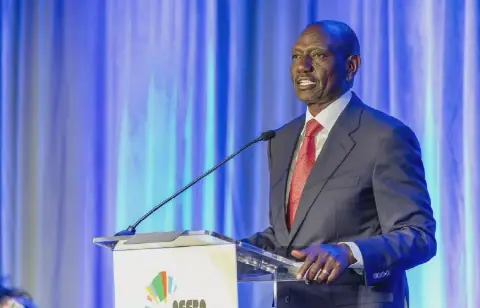
South Sudan's President Salva Kiir has signed into law changes to the country's election law, paving the way for presidential and legislative polls to be held on December 22. The changes, according to Reuters, aim to address concerns that could have hindered the polls. The new law scraps a provision requiring a permanent constitution and a national census before the elections can take place.
The changes are intended to remove obstacles that could have prevented the elections from taking place. The polls will be the first in South Sudan since it gained independence in 2011. Under the new law, President Kiir will continue to serve until the elections are held and a new president is elected. The law also provides for the vice-president and other officials to vacate their positions three months before the polls.
The number of members of the National Legislative Assembly has been reduced from 650 to 270. However, the opposition alliance, South Sudan Opposition Alliance, has rejected the changes, citing a lack of consensus among parties to the 2018 peace agreement. The alliance, which includes the Sudan People's Liberation Movement-in-Opposition (SPLM-IO) of Riek Machar, argues that the elections cannot be held in a free and fair manner without the implementation of key provisions of the peace agreement.
Machar, who has been detained since March 2025 on charges including treason and murder, has denied the allegations. His party and others have expressed concerns that the elections will not be credible without the implementation of the peace agreement. Despite these concerns, the government has proceeded with the changes to the election law. The electoral process is yet to begin, with voter registration yet to start.
Last week, President Kiir replaced the chairperson of the National Elections Commission, although the reasons for the move were not disclosed. The move has raised concerns about the independence of the electoral body. The international community has been closely watching the electoral process in South Sudan, with many expressing concerns about the country's readiness to hold free and fair elections.
The 2018 peace agreement, which ended a five-year conflict, provided for a transitional government of national unity and a roadmap for elections. However, the implementation of the agreement has been delayed, and the country has faced numerous challenges, including economic and humanitarian crises. The elections are seen as a critical step towards consolidating peace and stability in the country.
The changes to the election law have been welcomed by some, who see them as a step towards holding elections and consolidating democracy in South Sudan. However, others have expressed concerns about the rushed nature of the changes and the potential for the elections to be biased. The international community will be watching closely to ensure that the elections are free and fair.
Key points
- President Salva Kiir signs changes to election law to pave way for December polls
- Opposition alliance rejects changes, citing lack of consensus on peace agreement implementation
- Elections to be first in South Sudan since 2011 independence