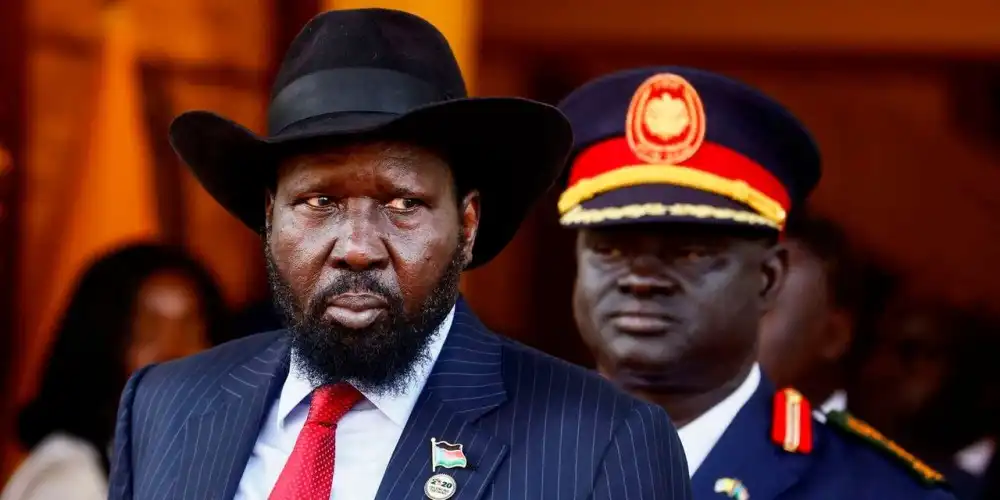
South Sudan's President Salva Kiir has dissolved the Revitalized Transitional Government of National Unity, paving the way for the country's first-ever general election on December 22. Through a series of decrees, President Kiir has appointed a caretaker administration to oversee the electoral process. The caretaker government includes a presidential adviser, 13 ministers, 10 state governors, and other key officials. This move has raised concerns among political and human rights organizations about the legitimacy of the upcoming elections.
The dissolution of the transitional government has granted President Kiir executive power, solidifying his position as the presidential candidate for the ruling Sudan People's Liberation Movement (SPLM). Notably, no prominent figures have announced plans to challenge him in the December poll. On September 21, President Kiir signed into law the National Elections Act, 2012 (Amendment) Bill, 2026, allowing him to remain in office with full constitutional powers throughout the electoral period.
Human rights watchdog Amnesty International has expressed concerns about the legitimacy of the polling process due to many unmet requirements. Amnesty's regional director for East and Southern Africa, Tigere Chagutah, emphasized that the South Sudanese authorities must ensure a conducive environment for people to vote and stand in elections, including respect for human rights and freedom from discrimination. Chagutah also highlighted the need for the government to guarantee the rights to freedom of expression, association, and peaceful assembly.
Amnesty International and other organizations have documented repressive tactics deployed by the South Sudanese authorities to silence dissent, detain critics, and restrict freedom of expression and the right to protest. The organization has called on the South Sudanese authorities to end the intimidation of journalists, civil society actors, and political opponents. The UN Commission on Human Rights in South Sudan has also warned that elections conducted without adequate safeguards could fuel renewed conflict and increase the risk of serious human rights violations and atrocity crimes.
In July, President Kiir signed into law amendments to the 2018 peace agreement, removing critical electoral preconditions, including a national population and housing census and the adoption of a permanent constitution. These processes have been deferred until after the elections. Investigative organization Sentry has warned that the prerequisites for credible elections – census, permanent constitution, voter register, and independent elections commission – are missing.
The Sentry organization has highlighted the need for these prerequisites to ensure the legitimacy of the electoral process. The absence of these critical components has raised concerns about the credibility and fairness of the December elections. The South Sudanese authorities face pressure to address these concerns and ensure that the elections are conducted in a free and fair environment.
The December elections are a critical milestone for South Sudan, and the international community is watching closely. The country's ability to conduct free and fair elections will be a test of its progress towards stability and democracy. The concerns raised by human rights organizations and the international community must be addressed to ensure the legitimacy of the electoral process and the stability of the country.
Key points
- Amnesty International has raised concerns about the legitimacy of the polling process due to many unmet requirements.
- The UN Commission on Human Rights in South Sudan has warned that elections conducted without adequate safeguards could fuel renewed conflict.
- The prerequisites for credible elections, including a census, permanent constitution, voter register, and independent elections commission, are missing.