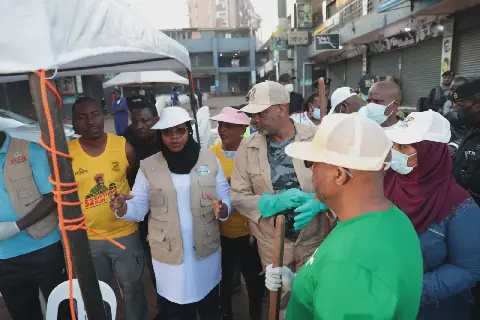
The government of South Sudan has launched a national population-based cancer registry, marking a significant step towards enhancing the country's response to cancer. This development is crucial for a health system facing numerous challenges, as reliable data will enable the understanding of the disease's scale, identification of affected populations, and development of effective prevention and treatment strategies.
For years, limited access to reliable health data has hindered efforts to plan and deliver suitable healthcare services in South Sudan. The establishment of the registry aims to address this gap by providing information on cancer cases, trends, distribution, and patient outcomes. Such data will empower policymakers to make informed decisions and allocate resources where they are most needed, ultimately improving cancer care.
However, launching the registry is only the first step, and the government must ensure that the system is adequately funded, professionally managed, and supported by trained health workers and functioning health facilities nationwide. Additionally, improving public awareness, encouraging early screening, and strengthening access to diagnosis, treatment, and palliative care are essential for reducing cancer deaths and enhancing the quality of care.
The Ministry of Health and its partners must move beyond collecting statistics and translate the information into practical interventions that benefit ordinary citizens. Cancer patients should not be left without hope due to financial difficulties or inadequate medical services. The registry's success will depend on the government's commitment to implementing these measures and ensuring that the system is effective in improving cancer care.
The launch of the registry has been welcomed by health stakeholders, who emphasize the need for sustained efforts to address the challenges facing South Sudan's healthcare system. The country's health system faces numerous challenges, including limited resources, inadequate infrastructure, and a shortage of skilled healthcare workers. Addressing these challenges will be crucial to ensuring the registry's effectiveness in improving cancer care.
According to The Dawn Newspaper, the success of this initiative should not be measured by the launch of a registry but by its contribution to saving lives, improving cancer care, and building a stronger healthcare system in South Sudan. The registry is expected to provide valuable insights into the country's cancer burden, enabling the development of targeted interventions and informed decision-making.
Ultimately, the national cancer registry has the potential to significantly improve cancer care in South Sudan, but its success will depend on the government's commitment to implementing the necessary measures to ensure its effectiveness. The Ministry of Health and its partners must work together to address the challenges facing the healthcare system and ensure that the registry translates into action and improved health outcomes for citizens.
Key points
- The registry will provide information on cancer cases, trends, distribution, and patient outcomes to inform decision-making and resource allocation.
- The government must ensure the registry is adequately funded, professionally managed, and supported by trained health workers and functioning health facilities.
- The registry's success will depend on its contribution to saving lives, improving cancer care, and building a stronger healthcare system in South Sudan.