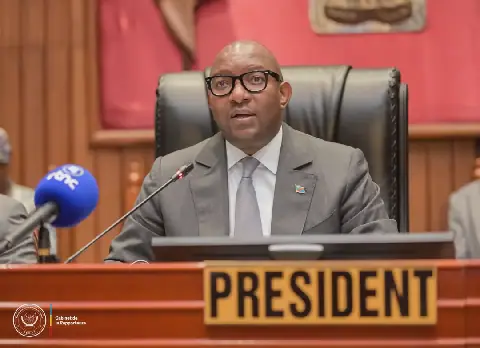
The Bank of South Sudan and the Ministry of Finance and Planning have launched the South Sudan Interbank Payment and Settlement System (SSIPSS), a digital payment system aimed at modernizing the country's financial management. This system links Real-Time Gross Settlement and Automated Clearing House rails directly to the Integrated Financial Management Information System. The move is expected to reduce transaction friction and fiscal leakage, which have been major challenges to the country's macroeconomic stability.
The manual government check system has been a bottleneck for liquidity and a breeding ground for leakages in an economy battered by severe oil revenue disruptions, triple-digit inflation, and ongoing civil servant salary arrears. The new digital payment system promises to reduce the gap between approved budget allocations and actual expenditure execution by replacing manual checks. This will help prevent "ghost worker" payroll inflation and procurement skimming, according to empirical studies of developing and sub-Saharan African economies.
The SSIPSS is expected to increase the effective return on public spending by decreasing leakages before money reaches contractors, suppliers, and civil workers. The system will also lower transaction costs and enhance audit trails. However, experts warn that payment infrastructure by itself does not ensure macroeconomic stability. The financial sector in South Sudan is weak, with a large concentration of commercial banking in Juba, significant cash hoarding outside of official banks, and recurrent liquidity shortages.
For faster electronic payments to increase welfare, recipients must be able to access cash and have faith in the institutions that store their accounts. The digital payment rails don't make money where it doesn't already exist. An electronic payment order can merely digitize an outstanding obligation rather than clear it when limited revenue or foreign exchange buffers clash with fiscal shortfalls or wage arrears.
The SSIPSS focuses more on the auditability and payment efficiency aspects of the fiscal equation than the solvency or monetary discipline aspects. To evaluate SSIPSS effectively, it is essential to consider complementary monetary and fiscal restrictions. Authorities must combine technology and discipline to guarantee that this change provides long-term assistance to common citizens rather than just automating financial burden.
To prevent inflationary monetization, the Ministry of Finance must enforce a "no-cash, no-commitment" rule within IFMIS, guaranteeing that electronic payment orders are only initiated when supported by verified Treasury Single Account balances. The Bank of South Sudan must also provide incentives to commercial banks to extend agent-banking networks into rural regions.
The government should release automated IFMIS-SSIPSS execution reports on a quarterly basis to transform technical transparency into true public accountability. The launch of SSIPSS is an essential component of contemporary financial infrastructure, indicating true institutional cooperation between Caretaker Minister Hon. Athian Diing Athian and Governor Dr. Addis Ababa Othow.
Key points
- The new digital payment system aims to reduce transaction friction and fiscal leakage.
- The system's success depends on complementary monetary and fiscal restrictions.
- Authorities must combine technology and discipline to guarantee the system's effectiveness.
Reporting sources
- Opinion| South Sudan leaps away from the cheque book · Radio Tamazuj