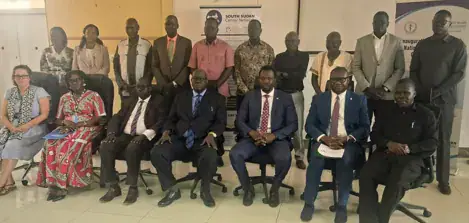
South Sudan has taken a significant step towards improving its response to the growing cancer burden by launching its first National Population-Based Cancer Registry. The registry was inaugurated at Juba Teaching Hospital on November 5, 2026, in a ceremony attended by health experts and partner organizations. This initiative aims to collect, analyze, and report information on cancer cases, including types of cancer, their distribution, and treatment outcomes. The registry is expected to provide reliable data to inform health policies and planning.
The launch of the cancer registry addresses a significant challenge in South Sudan's healthcare sector - the lack of reliable national data on cancer. According to the caretaker health minister, Dak Doup Bichok, the country has struggled with this issue for years, relying on modelled figures from neighboring countries. These figures, cited from the World Health Organization and the International Agency for Research on Cancer, estimate that South Sudan recorded 8,124 new cancer cases, 5,128 cancer-related deaths, and 11,645 people living with cancer within five years. However, these numbers are not based on comprehensive records collected directly from patients in South Sudan.
The cancer registry will collect information from public and private clinics, health centers, and other health facilities through active data collection by trained staff. Dr. Albino Amum, Director of the Cancer Registry at Juba Teaching Hospital, explained that the registry would initially be based at Juba Teaching Hospital, following recommendations by the African Cancer Registry Network and the International Agency for Research on Cancer. The registry will enable the country to track cancer cases, identify trends, and make informed decisions about cancer policies and resource allocation.
Despite the potential benefits of the cancer registry, Dr. Amum identified several challenges facing the initiative, including limited funding, a shortage of trained cancer registrars, fragmented health information systems, and poor communication among stakeholders. He emphasized that a cancer registry alone cannot treat patients and that efforts are being made to establish cancer services. The registry's success will depend on sustained government support, trained staff, reliable reporting from health facilities, and strong data quality and confidentiality.
The inauguration of the cancer registry has been welcomed by international partners, including the Africa Centers for Disease Control and Prevention (Africa CDC). Dr. Tolbert Geewleh Nyenswah, the Africa CDC's country representative for South Sudan, described the launch as an important achievement for the country's health sector. He emphasized that reliable cancer data would help authorities understand the scope of the disease, identify common cancers, and target affected groups.
The Africa CDC is working with South Sudan's Ministry of Health, the Division of Non-Communicable Diseases, and the National Public Health Institute to strengthen the country's capacity to address non-communicable diseases, including cancer. Nyenswah highlighted the importance of sustained government support, leadership, and reliable reporting from health facilities to ensure the registry's lasting value. The registry's findings will inform policy and practice, ultimately contributing to improved health outcomes.
The government has committed to ensuring the registry's operational sustainability and contribution to improving the country's health system. Minister Bichok emphasized that the registry would help the Ministry and its partners make informed decisions about cancer policies, planning, resources, allocations, investment, and cancer prevention and treatment. The launch of the cancer registry marks a significant step towards addressing the growing cancer burden in South Sudan.
Key points
- The registry will collect information from public and private clinics, health centers, and other health facilities.
- The launch of the registry addresses a significant challenge in South Sudan's healthcare sector - the lack of reliable national data on cancer.
- The registry's success will depend on sustained government support, trained staff, reliable reporting from health facilities, and strong data quality and confidentiality.