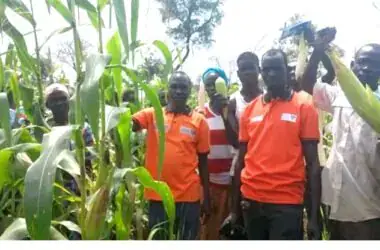
The government of South Sudan has initiated a program aimed at transforming the agricultural sector by providing training and financial support to farmers. This move is expected to improve the lives of many families who depend on farming for their daily food, income, and survival. The program includes training for farmers on modern farming techniques, soil preparation, seed selection, and other essential skills.
Agriculture is a critical sector in South Sudan, with many families relying on it for their livelihoods. However, farmers in the country face several challenges, including limited access to modern farming knowledge, equipment, and capital. Unpredictable weather conditions also make it difficult for farmers to increase production and improve their livelihoods. The government's decision to provide agricultural training is seen as a step towards addressing these challenges.
The training program will equip farmers with knowledge on livestock management, financial planning, and how to manage agricultural businesses. More importantly, the government is offering financial support through startup grants to farmers who complete the training program. This financial assistance can help farmers purchase necessary materials, such as seeds, fertilizers, and farming tools, to establish or expand their agricultural activities.
To ensure the program's success, beneficiaries are expected to develop clear business plans, manage their resources carefully, and work hard to achieve sustainable results. The government has emphasized that receiving a grant comes with responsibility and that the money should be used for its intended agricultural purpose. This approach aims to ensure that the program has a lasting impact on the agricultural sector.
Investing in farmers is seen as investing in the future of South Sudan. When farmers receive the necessary skills and financial support, they can increase food production, create employment opportunities, reduce poverty, and strengthen the national economy. The program can also reduce the country's dependence on imported food and improve food security.
The government has been encouraged to ensure that these training and grant programs reach farmers in both rural and urban communities, without discrimination. The selection process should be transparent, fair, and accessible to women, young people, and people with disabilities who are interested in agriculture. This will help promote inclusivity and ensure that the program benefits those who need it most.
The program is expected to empower farmers, improve food security, create jobs, and contribute to national development. If properly implemented and managed, this initiative can have a positive impact on the lives of many South Sudanese people. The government and farmers must work together to build a nation where agriculture is not just a means of survival but also a profitable and respected profession.
Key points
- The program aims to improve agricultural productivity and enhance livelihoods by providing training and financial support to farmers.
- The selection process for the program should be transparent, fair, and accessible to all interested farmers.
- The program has the potential to empower farmers, improve food security, create jobs, and contribute to national development.