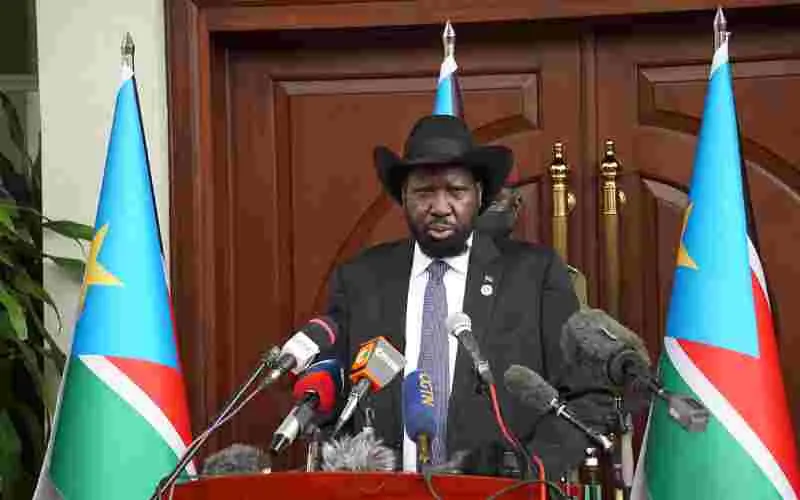
South Sudan President Salva Kiir has dissolved the government and appointed a caretaker administration ahead of the country's first elections. The move gives Kiir unbridled power, according to analysts. The world's youngest nation achieved independence in 2011 but soon plunged into a five-year civil war and figures among the poorest and most corrupt countries.
All vice-presidents, ministers, and local administrators were removed, and the national and state assemblies were dissolved in a presidential order. The organised forces and judiciary will remain fully operational. According to the decree, Kiir will remain in office as President of the Republic of South Sudan during the election period until the next elected president assumes office. Elections are due on December 22, having been postponed twice.
The government has failed to implement almost any of the preconditions set out in a 2018 peace agreement. No voters have been registered, rival armies have not been unified, and a long-awaited constitution has not materialised. Amnesty International said the move was a "decisive step" for South Sudan towards a "historic election" but urged authorities to ensure a conducive environment for people to vote and stand in elections.
The dissolution comes a day after changes to the National Elections Act that allowed Kiir to stay in power while removing all vice-presidents appointed under the 2018 peace deal during the election period. The amendments also allow for the vote to go ahead despite the lack of a constitution or census. Analysts warned that the changes offered Kiir unfettered control.
Michael Wani, a lawyer and former member of the constitution drafting committee, said Kiir will be the only person in power, without vice-presidents, without the executive, without the parliament. Independent analyst Machot Amuom told AFP there was a lot of "ambiguity" in the legal changes. "The new law gives the president full powers... He can decide even not to go for elections for another year or another two years," Amuom said.
There is increased tension in the capital Juba, with an AFP journalist reporting a heightened military presence. The Internal Security Bureau issued a directive ordering "all forces to be in uniforms and be on high alert for (3) days" from September 22. A civil servant told AFP his ministry had been closed without warning, and military were posted outside.
Tensions remain high between rival political groups, with opposition leader Riek Machar currently jailed on treason charges. International observers fear the election could tip the country back into full-blown conflict.
Key points
- President Salva Kiir has dissolved the government and appointed a caretaker administration ahead of the country's first elections.
- The move gives Kiir unbridled power, according to analysts.
- The election is due on December 22, despite the lack of a constitution, voter registration, and unified rival armies.