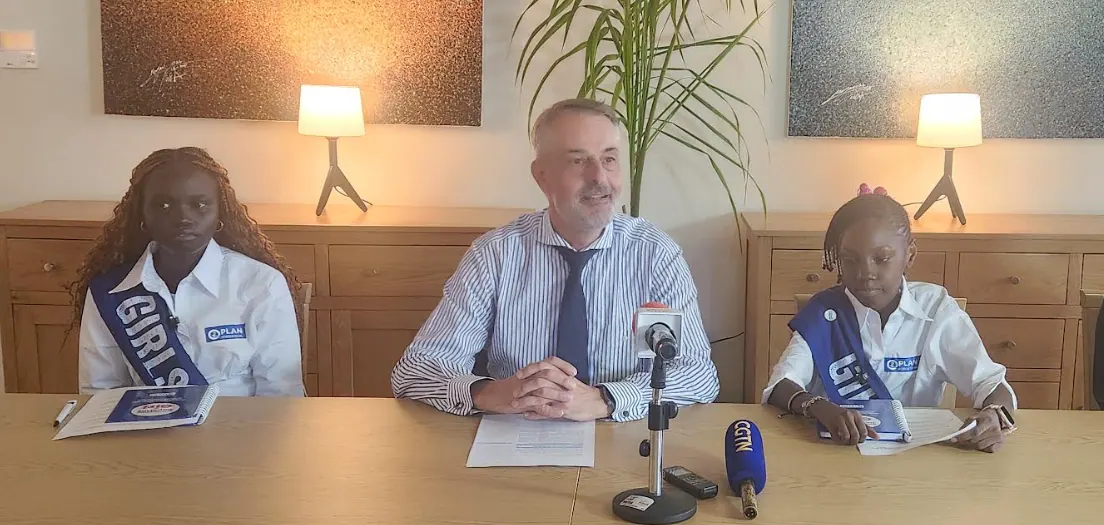
On October 11, 2026, two South Sudanese girls, Parasha Lamaro and Mary Adut, assumed ceremonial roles at the British Embassy in Juba. Lamaro, 11, took on the role of development director for a day, while 19-year-old Adut served as ambassador. The event was organised by the embassy and Plan International to mark the International Day of the Girl Child. The initiative gave the girls an opportunity to meet embassy staff and partners and raise issues affecting girls.
Lamaro highlighted the challenges faced by girls displaced by floods in South Sudan. She said floods force girls from their homes, leaving them without access to schools and health facilities. In camps, essential services are often lacking, making it difficult for girls to access education. Lamaro urged girls to remain focused on their ambitions despite the challenges they face. She advised them to study hard, focus in school, and avoid peer pressure to become leaders.
Adut, a member of Plan International’s Global Youth Reference Group, emphasized the need for quality and inclusive education for all girls, including those with disabilities. She said promoting quality education would improve the lives of girls. Adut’s statement was echoed by Seb Fouquet, the British Embassy’s humanitarian and development coordinator, who said the United Kingdom and its partners had supported access to education for 1.2 million girls through cash transfers.
Fouquet cited statistics indicating that half of girls in South Sudan marry before the age of 18 and that only one in four attends secondary school. He said empowering and investing in women and girls is crucial for the future of South Sudan. The British Embassy supports humanitarian assistance and peacebuilding initiatives focused on women and girls.
Reshma Azmi, Plan International’s country director in South Sudan, said the Girls Takeover campaign aimed to raise awareness of girls’ rights and ensure their perspectives informed programme priorities. She emphasized the importance of involving girls and women from the outset of climate adaptation programmes.
Azmi said girls and women should not be an afterthought in climate programming. They should be engaged from the onset of the programme and have the space and opportunity to talk about their rights and needs. The initiative helped keep girls’ needs in focus in areas including education, protection, health, and nutrition.
The event provided a platform for girls to express their concerns and aspirations. Lamaro’s message to girls was clear: never give up on your dreams. With hard work and determination, they can become leaders and make a positive impact in their communities. The Girls Takeover campaign seeks to promote girls’ empowerment and education in South Sudan.
Key points
- The event was organised to mark the International Day of the Girl Child and raise awareness of girls’ rights.
- Two South Sudanese girls took on ceremonial roles at the British Embassy in Juba to highlight education and flood risks.
- The initiative aimed to promote quality and inclusive education for all girls, including those with disabilities.