South Sudan is scheduled to hold general elections on December 22, 2026, marking the end of its post-conflict transition. President Salva Kiir and his inner circle have insisted on the set date. The elections aim to replace the current power-sharing government, led by the South Sudan People's Liberation Movement (SPLM), with a government voted for by the people. The ruling party has already started its internal primaries to select aspirants.
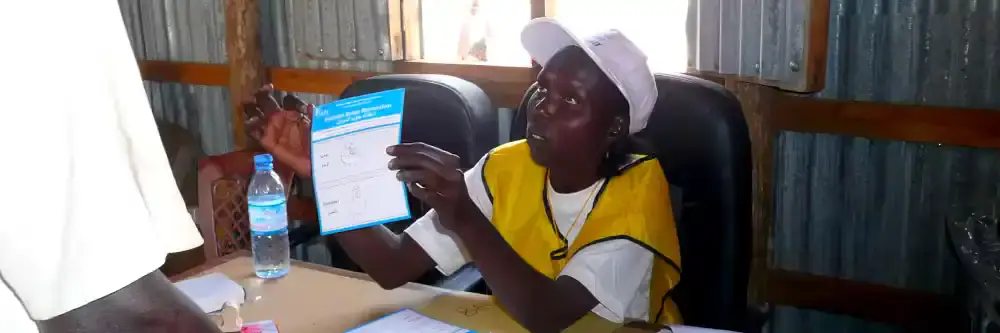
However, the electoral preparations face serious problems. The National Elections Commission announced that voter registration would begin in early November 2026, leaving less than two months before polling day. Even with accelerated preparations, the remaining tasks will be extremely difficult to complete. The commission must register voters, verify the register, confirm candidates, prepare ballot papers, and organise polling across the country.
Three major obstacles stand in the way of the electoral preparations. Firstly, South Sudan has no existing national electoral register. Secondly, millions of people are internally displaced, and infrastructure is poor. Lastly, uncertainty remains over a recently amended electoral law intended to regulate the electoral process. The country's population is estimated to be 12.5 million, with 80% living in rural areas.
The country's dispersed population and poor infrastructure pose significant challenges to voter registration. The National Elections Commission plans to register voters manually using paper registration books before entering the information into its computer systems. This process faces several challenges, including training thousands of staff and reaching communities in rural areas with poor roads and seasonal flooding.
The internally displaced population and refugees also raise questions about where and how they can register and vote. Around 2.5 million people are internally displaced, while more than 2.3 million refugees live in neighbouring countries like Kenya and Uganda. The electoral commission appears to be planning to accept confirmation of identity through various means, but the process remains unclear.
The transitional institutions established under the 2018 peace agreement to end a five-year civil war were dissolved in September 2026, making another postponement of the elections more difficult. However, any delay would also prolong a caretaker government operating without parliamentary checks and balances, taking away official scrutiny from the executive.
The challenges facing South Sudan's electoral preparations highlight the complexities of the country's post-war transition. The country's experience with elections has been limited, and the December 2026 polls will be a significant test of its democratic institutions. The international community is closely watching the preparations, and the outcome will have implications for the country's stability and future.
Key points
- The elections are meant to bring South Sudan's post-conflict transition to an end.
- The country's dispersed population and poor infrastructure pose significant challenges to voter registration.
- The transitional institutions established under the 2018 peace agreement were dissolved in September 2026.