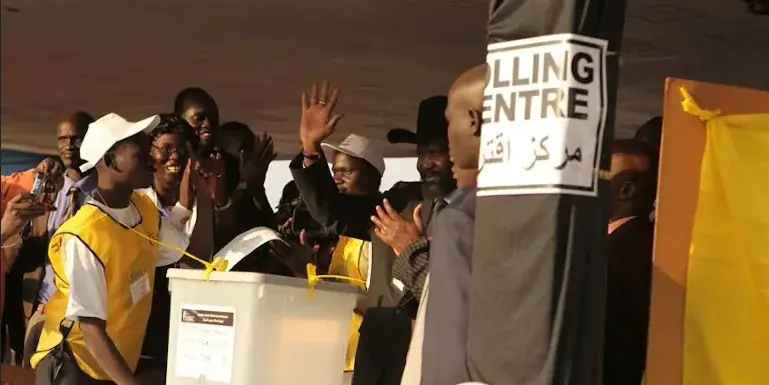
South Sudan's planned December 22 elections are facing significant challenges to their credibility, according to a report by the Reconstituted Joint Monitoring and Evaluation Commission (RJMEC). The commission, which is responsible for monitoring the implementation of the 2018 peace agreement, has expressed concerns about the conditions for a peaceful end to the country's transitional period. Several key commitments under the agreement remain unfulfilled, including the lack of consensus among political parties over the legal and political framework for the elections.
The RJMEC report criticized the government's handling of proposed amendments to the 2018 peace agreement, which were submitted to the Transitional National Legislature without the required endorsement. The commission noted that the proposed changes did not meet the threshold of endorsement by at least two-thirds of RJMEC's voting members, making them inconsistent with the peace agreement. This has raised concerns about the legitimacy of the electoral process and the government's commitment to upholding the agreement.
The report also highlighted the unilateral dissolution of the Presidency as contrary to Article 1.1.4 of the peace agreement, which provides for the transitional government's mandate to continue until elections are held. This move has been seen as a significant obstacle to the electoral process, as it has created a power vacuum and raised questions about the legitimacy of the government's actions. The RJMEC has called for an inclusive process involving all signatories and holdout groups to ensure a peaceful conclusion to the transition.
Security conditions in South Sudan also pose significant risks to the electoral process, according to the RJMEC report. The country continues to experience armed clashes, intercommunal violence, and active armed groups, which could affect voter registration, campaigning, and the safety of candidates. The commission has called on the parties to uphold the permanent ceasefire and complete priority security tasks, including arrangements for election security.
The report also highlighted delays in constitutional reform and transitional justice, which are critical components of the 2018 peace agreement. The RJMEC noted that no new progress had been recorded during the reporting period on the permanent constitution-making process, and that momentum had slowed after the government decided to separate the process from the elections. This has raised concerns about the government's commitment to implementing the agreement and ensuring a peaceful transition.
The RJMEC has urged the parties to put national interests above partisan considerations and engage in dialogue to ensure a peaceful conclusion to the transition. The commission has emphasized that a peaceful conclusion to the transition will depend on political will and adherence to the letter and spirit of the agreement. The report's findings highlight the need for urgent action to address the challenges facing the electoral process and ensure a credible and peaceful transition.
The South Sudanese government has faced criticism for its handling of the electoral process, including the detention of opposition figures and the exclusion of some political groups from the inter-party dialogue. The RJMEC has called for an inclusive process involving all signatories and holdout groups to ensure a peaceful conclusion to the transition. The commission's report highlights the need for urgent action to address the challenges facing the electoral process and ensure a credible and peaceful transition.
Key points
- South Sudan's December 22 elections face risks to credibility due to unresolved disputes and delays in implementing the 2018 peace agreement.
- The RJMEC report criticized the government's handling of proposed amendments to the 2018 peace agreement, which were submitted to the Transitional National Legislature without the required endorsement.
- Security conditions in South Sudan pose significant risks to the electoral process, including armed clashes, intercommunal violence, and active armed groups.