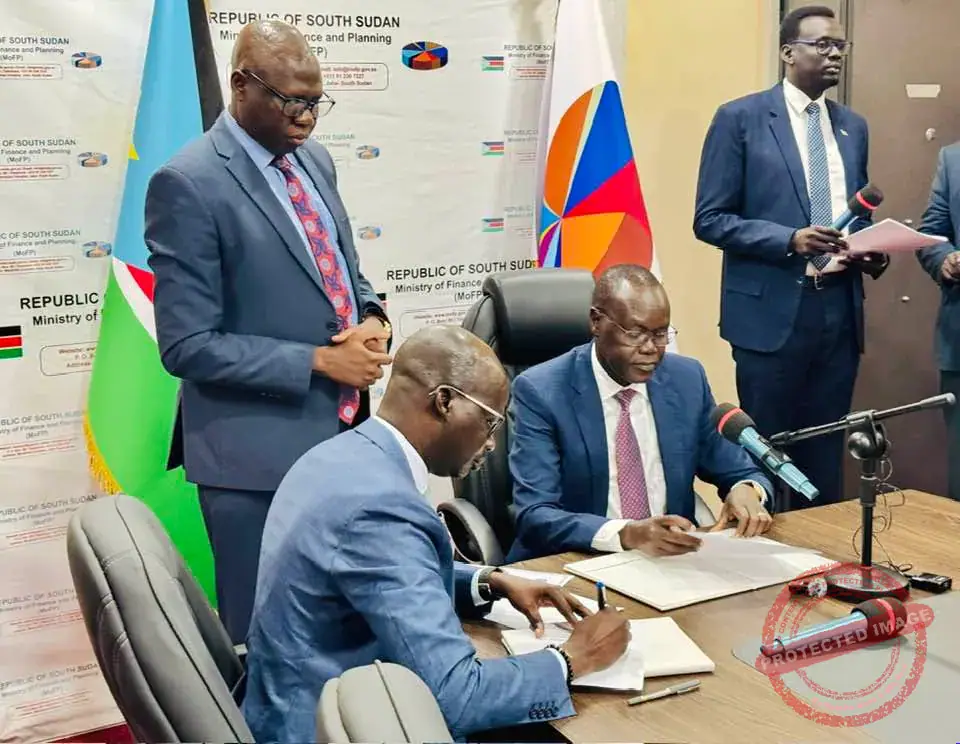
The Bank of South Sudan and the Ministry of Finance and Planning have introduced a new electronic payment system, the South Sudan Interbank Payment and Settlement System (SSIPSS). This system integrates the Real-Time Gross Settlement (RTGS) and Automated Clearing House (ACH) with the government’s Integrated Financial Management Information System (IFMIS). The launch aims to modernize financial transactions and improve efficiency.
The RTGS will handle high-value and urgent transactions, while the ACH will process eligible low-value and bulk payments. This setup will enable government payments to be transferred directly into beneficiaries’ bank accounts, reducing the reliance on manual cheques. The system is expected to enhance financial services through faster bank transfers, secure settlements, and increased confidence in the banking sector.
Governor of the Bank of South Sudan, Dr. Addis Ababa Othow, highlighted the system's potential to improve financial services. Caretaker Minister of Finance and Planning, Athian Diing Athian, noted that the reform would improve budget execution, strengthen expenditure controls, and enhance oversight of public spending. The launch was attended by senior officials from both institutions, including the First Undersecretary of the Ministry of Finance and Planning.
To receive payments through the new system, all government payment beneficiaries, including suppliers, contractors, institutions, and individuals, must have accounts with commercial banks licensed by the Central Bank. The Director of the National Payment System at the Central Bank, Akum David Sabahker, advised those seeking information on government payments to contact the Ministry of Finance and Planning.
The Ministry of Finance and Planning is responsible for initiating, authorizing, and processing payments. The new system is expected to bring greater transparency and accountability to financial transactions. By streamlining payment processes, the government aims to reduce delays and inefficiencies associated with manual cheque payments.
The introduction of SSIPSS is part of a broader effort to modernize South Sudan's financial sector. The system will help to increase access to financial services and promote economic growth. As the country continues to develop its financial infrastructure, the Central Bank and Ministry of Finance are working to ensure that the benefits of these improvements are shared by all citizens.
The successful implementation of SSIPSS will depend on effective coordination between the Central Bank, Ministry of Finance, and commercial banks. With the right infrastructure in place, South Sudan can look forward to a more efficient and secure financial system. The launch of SSIPSS marks an important step towards achieving this goal.
Key points
- The new electronic payment system will allow government payments to be transferred directly into beneficiaries' bank accounts.
- The system integrates the Real-Time Gross Settlement (RTGS) and Automated Clearing House (ACH) with the government’s Integrated Financial Management Information System (IFMIS).
- All government payment beneficiaries must have accounts with commercial banks licensed by the Central Bank to receive payments through the new system.