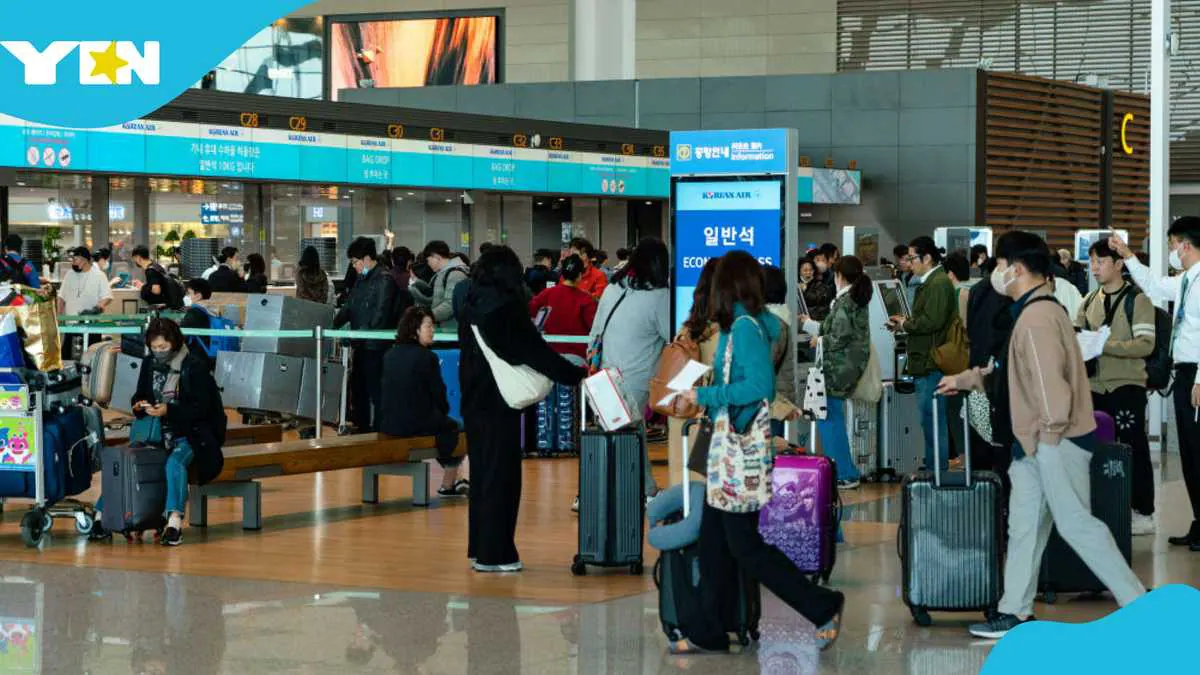
South Korea has published a list of 42 countries whose citizens are eligible to use its Smart Entry Gate system, an automated border access point that uses biometrics and digital technology to verify a traveller's identity. The list, published on the South Korean government's official website, includes countries from Europe, Asia, Canada, Australia, and New Zealand. This new system aims to streamline the border entry process for citizens of these countries.
The list of eligible countries is dominated by European nations, with 33 of the 42 qualifying countries located on the continent. Asian territories, including Taiwan, Hong Kong, Macao, Japan, and Singapore, also make up a significant portion of the list. Additionally, Canada, Australia, and New Zealand are included in the list of eligible countries. This reflects a pattern seen across several international automated border programmes.
The Smart Entry Gate system eliminates the need for manual document checks at entry points, providing a more efficient and streamlined process for citizens of eligible countries. The system uses biometrics and digital technology to verify a traveller's identity, making it a secure and convenient option for travellers. The South Korean government has introduced this system to improve the overall travel experience for citizens of eligible countries.
However, the exclusion of African countries from the list has significant implications for travellers from across the continent. Citizens of Ghana, Nigeria, Kenya, South Africa, and every other African nation will not be permitted to use the automated gate system and must instead undergo standard manual border processing when entering South Korea. This may cause inconvenience and delays for travellers from these countries.
The exclusion of African countries from the Smart Entry Gate system reflects a broader trend seen in international automated border programmes. Typically, qualifying countries tend to be drawn from Europe, North America, and parts of Asia, with African nations consistently left out. This highlights the need for African countries to improve their security and immigration infrastructure to meet international standards.
Some of the countries on the list include Germany, France, Italy, the United Kingdom, and Australia. These countries have been deemed eligible due to their robust security and immigration systems, which align with South Korea's standards. The South Korean government has not provided a specific reason for the exclusion of African countries, but it is likely due to differences in security and immigration infrastructure.
The introduction of Smart Entry Gates is part of South Korea's efforts to enhance its border security and improve the travel experience for citizens of eligible countries. While the exclusion of African countries may be disappointing, it is an opportunity for these countries to review and improve their security and immigration systems. The South Korean government may consider expanding the list of eligible countries in the future.
Key points
- The Smart Entry Gate system uses biometrics and digital technology to verify a traveller's identity, eliminating the need for manual document checks at entry points.
- European nations account for the vast majority of spots, with 33 of the 42 qualifying countries located on the continent.
- Citizens of African countries, including Ghana, Nigeria, Kenya, and South Africa, will not be permitted to use the automated gate system and must undergo standard manual border processing.