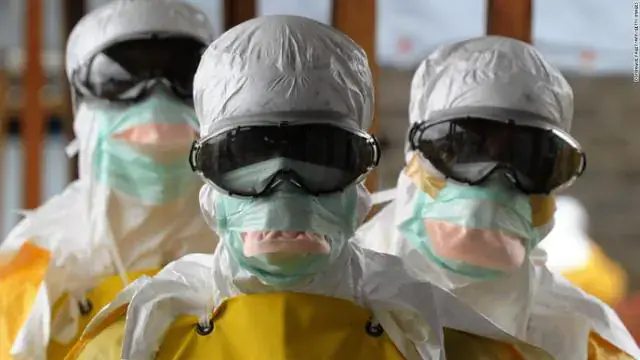
The health ministry in Sudan's South Darfur State has taken proactive measures to prevent the spread of Ebola by training rapid response teams from areas bordering the Central African Republic and South Sudan. The training workshop, which concluded last week, aimed to equip medical personnel with the necessary skills to detect and respond to potential Ebola cases. The teams were brought from Um Dafuq locality, Al-Sunta, Buram, and Al-Radom, all of which are located along the borders with the Central African Republic and South Sudan.
According to Dr. Abbas Hassan Shams al-Din, director of the Emergency and Epidemic Control Department, the training is crucial in maintaining a high level of preparedness against Ebola. He emphasized that the trained teams must be vigilant and submit timely reports on any suspected cases or developments related to the disease. The ministry plans to hold another three-day workshop for focal-point staff responsible for monitoring the disease and submitting reports from their areas of work.
Dr. Mustafa Al-Barmaki, a director at the state health ministry, highlighted the risks associated with Ebola, describing it as a viral disease that causes severe and often fatal haemorrhagic fever. He explained that the disease can spread rapidly through contact and close interaction with infected people. The Ministry of Health prioritizes the prevention of epidemics through several measures, including surveillance and early detection.
The emergence and spread of Ebola in the Democratic Republic of the Congo and Uganda have raised concerns in South Darfur. Dr. Al-Barmaki urged the trained teams to be aware of the risks and take necessary precautions to prevent the spread of the disease. He also emphasized the importance of submitting timely reports on any suspected cases or developments related to the disease.
Dr. Badr al-Din al-Sharif, the World Health Organization's coordinator in the Darfur region, provided context on the history of Ebola, noting that it was first identified in 1976 in what is now South Sudan's Western Equatoria region. He added that efforts had been undertaken to develop vaccines against most strains of the virus, but the virus can evolve into new variants against which existing vaccines might not be effective.
According to Dr. Al-Sharif, the strain of Ebola currently circulating has no established treatment, although a treatment is still undergoing trials and has begun to be used in the Democratic Republic of the Congo. He cited statistics showing that the disease had killed approximately 45 percent of those infected in countries where it had appeared, with an estimated 4,000 deaths out of around 9,000 cases.
The World Health Organization's coordinator emphasized that healthcare workers are among those most at risk of contracting Ebola, as they often come into contact with patients before the disease is detected. The awareness workshop was organized to equip medical personnel with basic protective measures to reduce their risk of infection. The training aims to prevent the spread of Ebola and ensure a rapid response in case of an outbreak.
Key points
- The health ministry in Sudan's South Darfur State has trained rapid response teams to strengthen surveillance and early detection of Ebola.
- The training workshop aimed to equip medical personnel with necessary skills to detect and respond to potential Ebola cases.
- Healthcare workers are among those most at risk of contracting Ebola, as they often come into contact with patients before the disease is detected.