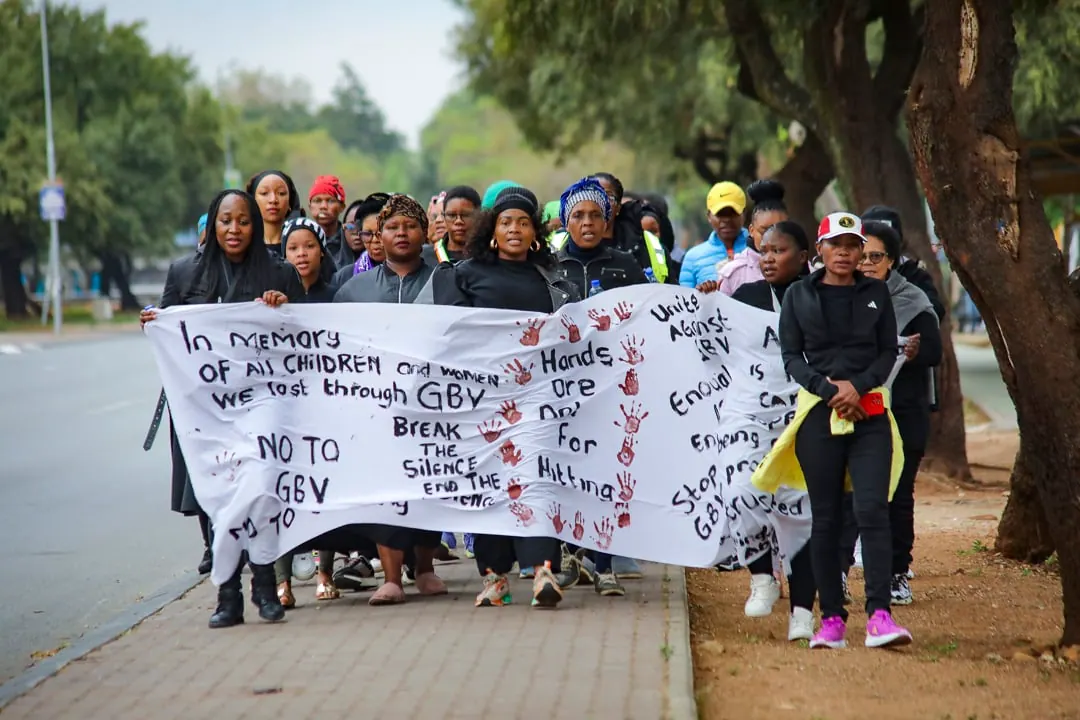
A march was held in Soweto on Friday to honor Elizabeth Moselakgomo, one of the women whose bodies were found in the East Rand. The march was part of a larger effort to bring attention to the issue of violence against women in South Africa. According to reports, Moselakgomo's body was one of several found in the area. The march was attended by local residents who are demanding action from authorities to address the growing problem of violence against women.
The issue of violence against women in South Africa has sparked widespread concern and outrage. Many citizens are calling for greater action from authorities to address the problem. The government has faced criticism for its handling of the issue, with some accusing officials of not doing enough to prevent violence against women. The march in Soweto was just one example of the growing movement to bring attention to the issue and push for change.
The problem of violence against women in South Africa is a complex one, with many factors contributing to the issue. According to experts, the country's high levels of poverty, unemployment, and inequality have all contributed to the problem. Additionally, a culture of masculinity that often condones violence against women has been cited as a factor. The government has implemented various initiatives aimed at addressing the issue, but many argue that more needs to be done.
The march in Soweto was not an isolated event, as similar protests have been held across the country in recent weeks. The growing movement to bring attention to the issue of violence against women has been driven in part by social media, with many citizens using platforms like Twitter and Facebook to share their own experiences and demand action from authorities. The hashtag #JusticeForElizabeth has been trending on social media, with many calling for justice for Moselakgomo and other victims of violence.
The government has responded to the growing criticism, with officials pledging to take action to address the issue. The Minister of Women, Youth and People with Disabilities, has stated that the government is committed to implementing policies and programs aimed at preventing violence against women. However, many critics argue that the government has not done enough to address the issue, and that more concrete actions are needed.
The issue of violence against women in South Africa has also sparked a wider conversation about the country's culture and values. Many citizens are calling for a shift in cultural attitudes, with some arguing that the country's traditional masculinity is a major contributor to the problem. Others argue that the issue is also linked to broader societal problems, such as poverty and inequality.
As the movement to bring attention to the issue of violence against women continues to grow, many are calling for sustained action and commitment from authorities. The government has faced criticism for its handling of the issue, and many argue that more needs to be done to prevent violence against women. The march in Soweto was just one example of the growing movement to bring attention to the issue and push for change.
Key points
- The South African government has faced criticism for its handling of the issue of violence against women.
- A culture of masculinity that often condones violence against women has been cited as a factor contributing to the problem.
- The growing movement to bring attention to the issue of violence against women has been driven in part by social media.