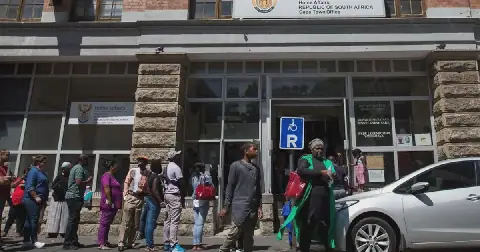
The people of South Africa are growing increasingly frustrated with the government's response to gender-based violence and crime, and are demanding tangible results rather than just speeches and promises. Despite President Cyril Ramaphosa's repeated assurances that the government is taking the issue seriously, many citizens feel that not enough is being done to address the problem. The National Council on GBVF Act was enacted in 2024, and the government has announced further measures to strengthen law enforcement and support for victims.
The government's efforts to combat GBV have been hindered by a lack of resources and infrastructure, including a shortage of personnel and equipment in detective services. Ramaphosa himself acknowledged in his 2025 state of the nation address that detective services needed additional personnel and that the government intended expanding surveillance, analytics and smart-policing capabilities. However, many citizens are skeptical that these measures will be enough to make a meaningful difference.
One of the key challenges in addressing GBV is the need to balance the rights of accused persons with the rights of victims and the broader public. The constitution protects extensive rights, including those afforded to accused persons, but some argue that this has led to a lack of accountability for perpetrators. There is a growing debate about whether the balance between individual rights, victims' rights and public safety is working as effectively as it should.
The death penalty has been put forward as a possible solution to the problem of GBV, but it remains a contentious issue. Some argue that it would serve as a deterrent to would-be perpetrators, while others argue that it is a violation of human rights. The debate over the death penalty is part of a broader discussion about how to address the root causes of GBV and to support victims.
The ANC, which has been the dominant governing party in South Africa for decades, cannot avoid taking responsibility for the successes and failures of the governments it has led. While historical credentials such as Nelson Mandela and Oliver Tambo's legacy of struggle should not be erased from history, they cannot be used as a shield against contemporary accountability.
As the country prepares for upcoming elections, citizens are being urged to consider the track record of those seeking their votes. Rather than being swayed by party history, slogans, or personalities, voters should be evaluating parties based on their performance, accountability, policy, implementation, and measurable outcomes. The question should not simply be "Who gives the best speech?" but rather "Who has a credible plan, the capacity to implement it, and the willingness to be held accountable when it fails?"
Ultimately, South Africans are calling for a government that understands that public safety is not a public-relations exercise. They want to see functioning institutions, professional policing, effective detectives, and courts capable of processing cases efficiently. They also want to see meaningful support for victims and serious action against organised crime and violent offenders. By demanding more from their government, South Africans can work towards creating a safer and more just society for all.
Key points
- The people of South Africa are demanding tangible results in the fight against GBV and crime, rather than just speeches and promises from politicians.
- The government's efforts to combat GBV have been hindered by a lack of resources and infrastructure, including a shortage of personnel and equipment in detective services.
- The balance between individual rights, victims' rights and public safety is a contentious issue that requires a national debate.