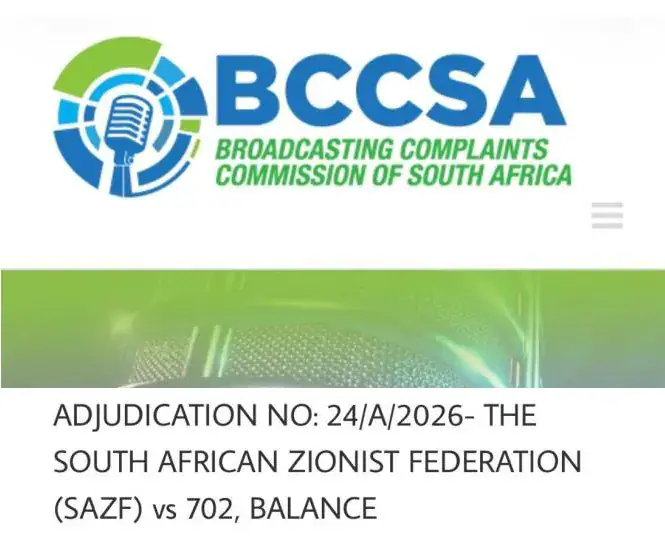
The South African Zionist Federation (SAZF) has successfully pursued broadcasting complaints, securing two favourable adjudications from the Broadcasting Complaints Commission of South Africa (BCCSA) against radio stations 702 and Kaya FM. These rulings require the stations to broadcast apologies for failing to ensure balance in discussions about Israel. The SAZF's efforts aim to hold broadcasters accountable for their content and ensure that listeners receive informed debate.
The first ruling concerned an interview with academic Jessica Breakey on Radio 702 on 21 May 2026. During the interview, Breakey repeatedly referred to Israel as the "Zionist entity," which the presenter, Siyabonga Motha, allowed to go unchallenged. The BCCSA found that substituting a sovereign nation's name with a phrase of non-recognition represented "a deliberate political stance rather than neutral descriptive reporting." The commission also noted that the presenter had a responsibility to engage with the meaning of the terminology used.
The BCCSA's assessment led to Radio 702 being ordered to broadcast a correction and apology. The station accepted the finding and complied with the order. A similar case was brought against Kaya FM, which featured commentator Thembisa Fakude discussing Israel and its prime minister on 11 August 2026. The commission found that the presenter, Phemelo Motene, could have asked questions to elicit an opposing viewpoint but failed to do so.
The Kaya FM case highlighted a failure to provide balance in a discussion about a controversial topic. The commission ordered the station to apologise and acknowledge that strong, one-sided opinions had been aired without an attempt to present an alternative perspective. During the proceedings, Kaya FM reported that it had introduced a protocol for presenters covering editorial responsibility and the handling of controversial subjects.
The SAZF's pursuit of broadcasting complaints has resulted in a third favourable outcome, an agreed right of reply, concerning an interview with Fakude on The Aubrey Masango Show. This created an opportunity to present an alternative perspective to the programme's listeners. The SAZF's efforts demonstrate the importance of challenging broadcasts that fail to meet broadcasting standards.
The rulings have significant implications for broadcasting standards in South Africa. The SAZF's efforts aim to ensure that presenters ask difficult questions, recognise loaded language, and make reasonable efforts to ensure that opposing perspectives receive a fair hearing. The community deserves to know that when broadcasters fail in their responsibilities, there is a determined effort to hold them accountable.
The SAZF will continue to insist on high broadcasting standards, and South African audiences deserve informed debate. Criticism of Israel is legitimate, but it must be presented in a balanced and fair manner. The SAZF's work ensures that the community's concerns are heard and addressed, and that broadcasters are held accountable for their content.
Key points
- SAZF secures 2 favourable adjudications against radio stations 702 and Kaya FM.
- Rulings require stations to broadcast apologies for failing to ensure balance in discussions on Israel.
- SAZF's efforts aim to hold broadcasters accountable and ensure informed debate.
Reporting sources
- When broadcasters cross the line, accountability matters · Jewish Report