In South Africa, municipal elections have seen voters confusing local and national issues, often voting for a national party leader rather than a competent, honest, and locally knowledgeable candidate. This trend has resulted in many voters choosing political parties or candidates based on a single national issue, unrelated to residents' critical needs or outside a local municipality's delivery mandate. Consequently, local voters tend to prioritize a candidate's ability to sing "struggle" songs or shout "struggle" slogans over their competence, honesty, and experience.
The bulk of South Africa's public services are delivered at the municipal level, but the municipal sphere is in a dire crisis. Municipalities struggle to fix potholes, maintain water infrastructure, or pay Eskom, the state power utility for electricity. Many local municipalities resemble mini-failed states. The auditor-general reported that only 15% of municipalities received clean audits in the 2025 fiscal year, with many receiving poor audits for years, sometimes up to 10 years. This has significant implications for effective public service delivery at the local level.
Effective public service delivery at the local level depends on the quality of a municipality's councillors. However, many councillors are corrupt, violent, and linked to crimes. A significant number of local councillors have never worked before or managed any kind of local business or organisation, and many do not have matric. The South African Local Government Association estimates that 27% of the country's municipal councillors do not have matric. This lack of quality and experience contributes to the failure of municipalities.
Dysfunctional municipalities are a constraint on economic growth, investment, business expansion, and job creation. According to William Gumede, "SA's economy is destroyed at the local level by failing municipalities run by corrupt, incompetent and uncaring councillors." The poor quality of elected councillors is a main reason for the failure of municipalities. This has severe consequences for the country's economy and citizens' quality of life.
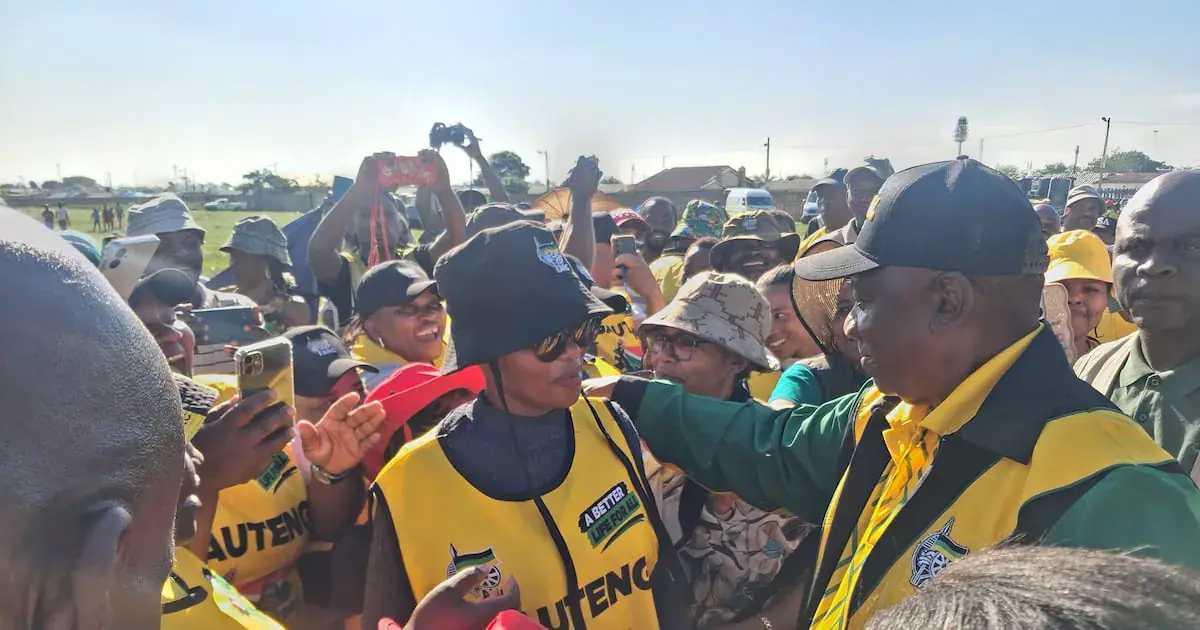
In their municipal election campaigns, many political parties have put up their national leaders as the face of their local campaigns. On local election posters, one often sees the faces of the ANC president, Cyril Ramaphosa; the EFF president, Julius Malema; or the uMkhonto weSizwe president, Jacob Zuma, rather than the faces of the parties' actual ward candidates. This emphasizes the national party leaders over local candidates, which can mislead voters.
The national and provincial voting system is based on party-list proportional representation, with voters choosing a political party, not individuals. Local government elections use a mixture of proportional representation and constituency-based elections. However, although citizens vote for half of their councillors directly in their wards, these ward councillors are still largely appointed by their political parties. This system can lead to a disconnect between voters and their local representatives.
Unless citizens vote in the municipal elections for candidates based on their competence, knowledge, and honesty to tackle local issues, SA's municipalities will continue to fail, and voters will continue to suffer from poor local public service delivery, corruption, and a lack of safety. Voters, community organisations, and civil society organisations must demand that local candidates show what they did during their previous terms to improve the conditions of residents. This can help ensure that municipalities deliver effective public services and address citizens' needs.
Key points
- Many South African voters confuse local and national issues in municipal elections, prioritizing national party leaders over local candidates.
- The poor quality of municipal councillors, often corrupt, violent, and inexperienced, contributes to the failure of municipalities.
- The electoral system, which emphasizes party-list proportional representation, can lead to a disconnect between voters and their local representatives.