Swimmers selected for the upcoming World Short Course Championships in Beijing have been issued an ultimatum by Swimming South Africa: pay up to R55,000 out of their own pockets or face immediate withdrawal from the team. According to a leaked circular sent to provincial affiliate presidents on October 28, athletes must pay an estimated R55,000 to cover flights, accommodation, and official management costs. The circular, signed by acting president Zikie Molusi, outlines a strict payment schedule, with a first deposit of R40,000 due by November 10 and the remaining R15,000 balance required by November 25.
The financial burden on swimmers and their families is significant, with athletes who choose to book their own flights still required to transfer approximately R37,000 to the federation's bank account by November 10 for accommodation and management fees. Competitors are also responsible for financing their own Chinese entry visas, international travel insurance, and domestic connecting flights to Johannesburg. The warning from the governing body is clear: failure to pay the full amount will result in the athlete being withdrawn from the team.
The reality of the financial burden on families is stark, with one parent of a selected swimmer revealing that keeping their child competing internationally costs around half a million rand per year. Although the Gauteng Department of Sport has subsidized some of these costs, the constant out-of-pocket demands remain punishing. The same parent noted that the federation's approach is an unyielding system where families either pay up or their children miss out.
The revelations contradict claims made by sports administrators that national squads are shielded from financial stress through initiatives like SASCOC's Operation Excellence and World Aquatics development funding. However, in practice, OPEX provides targeted support to a select group of individual medal contenders rather than team-wide subsidies. The extent to which international aquatics grants relieve travelling athletes from the financial burden remains unverified.
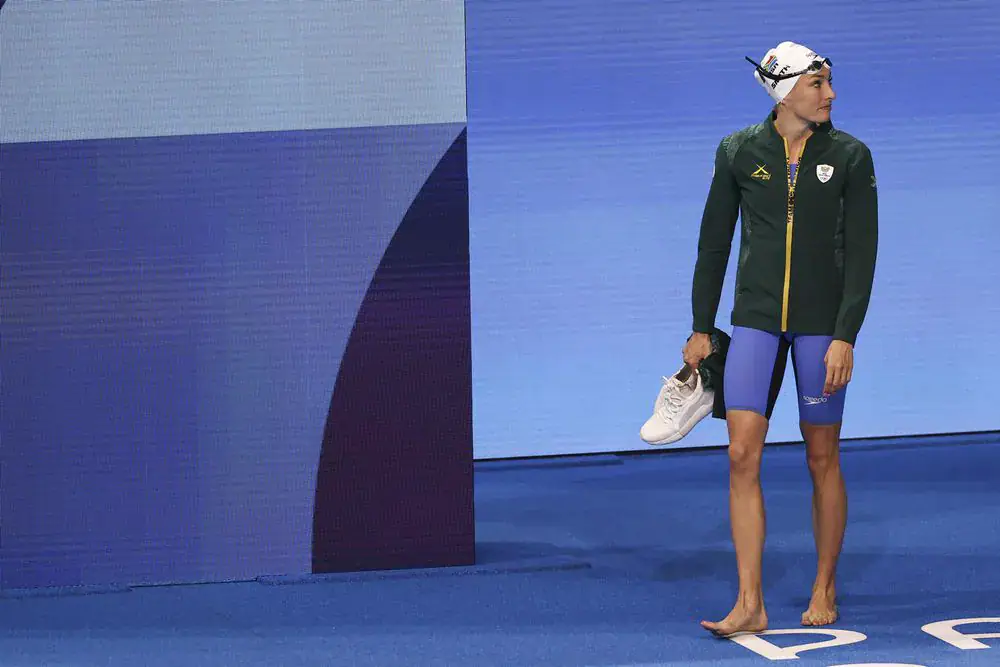
The financial struggles of South African swimmers have been highlighted by the country's most decorated Olympian, Tatjana Smith, who described her relationship with Swimming South Africa as "absent". Smith revealed that her success was largely due to the support of her family and support group, who invested around R10 million over 16 years. While commercial standouts like Pieter Coetzé can generate independent prize money on global circuits, the leaked Beijing document proves that for the next generation of South African talent, national pride remains an expensive luxury that only personal wealth can afford.
The selected team for the World Short Course Championships includes 21 swimmers, with Coetzé and Smith headlining a formidable squad. However, the financial demands placed on athletes have raised concerns about the accessibility of competitive swimming in South Africa. The country's sports officials have been accused of deflecting blame, while Japan's Takeshi Okada has shown what real integrity looks like with his principled resignation.
As the swimming community grapples with the implications of the leaked circular, it remains to be seen how the situation will be resolved. One thing is certain, however: the financial burden on South African swimmers and their families is a significant obstacle to competing at the highest level.
Key points
- Swimmers must pay up to R55,000 out of pocket to compete in the World Short Course Championships in Beijing.
- The financial burden on families is significant, with one parent revealing costs of around half a million rand per year.
- The situation has raised concerns about the accessibility of competitive swimming in South Africa.