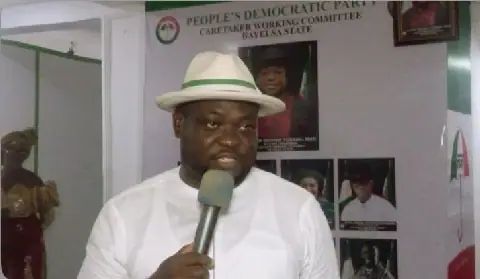
South African political strategist Bejani Chauke has publicly disputed allegations made in a recent Sunday Times article. The article, written by Makhudu Sefara, made references to Chauke's involvement in the Phala Phala matter and alleged that he was a "fixer and a back channel influence peddling person who is a liability to President Ramaphosa." Chauke has strongly denied these allegations, stating that they are unproven, contested, and have already been addressed by him before competent institutions.
Chauke's concerns center around the article's reliance on allegations attributed to Arthur Fraser, which he claims are unproven and have been contested. He also notes that the article draws inferences around the Phala Phala matter without sufficient evidence. Chauke emphasizes that allegations are not evidence, repetition is not verification, and proximity to political office is not proof of wrongdoing. He also highlights that a document allegedly linking him to the Phala Phala matter has been distanced from by Fraser, who claimed it was not initialled by him.
The controversy surrounding Chauke's alleged involvement in the Phala Phala matter has been ongoing, with Fraser making claims about a bribe of R50m being sought to collapse the case. Chauke denies any wrongdoing and states that he did not yield to extortion attempts by a journalist acquaintance of Fraser. The Sunday Times article has been criticized by Chauke for relying on peddled narratives as fact and for making speculative and unfair references to his private residence and assignments as special envoy to the president.
Chauke served officially as a political adviser to President Ramaphosa and later resigned, only to be appointed as his special envoy on matters assigned from time to time. He rejects any characterization of his conduct that suggests illegality, impropriety, bad faith, personal enrichment, or the exercise of unauthorized power. Chauke also denies allegations related to Phala Phala or any associated matter, stating that his meeting with the late president Hage Geingob was in his capacity as the president's special envoy, on a national-security matter.
The article's description of Chauke as "a fixer and a back channel influence peddling person who is a liability to President Ramaphosa" has been strongly disputed by him. He argues that such labels are not analysis but rather an attempt to damage his reputation. Chauke emphasizes that reputational harm arises when allegations are repeated without adequate context and without distinguishing between allegation, evidence, finding, and legal conclusion.
Chauke has called for fairness, accuracy, context, and the basic principle that disputed allegations are not facts in public references to him. He believes that a senior editor of a national newspaper, and a leader within the South African National Editors' Forum, ought to appreciate the difference between scrutiny and insinuation. Chauke's objection is not to scrutiny but to a mode of public commentary that collapses allegation, association, and inference into guilt.
The debate about accountability in South Africa must apply the same standard to everyone, with facts tested, allegations qualified, and reputations not sacrificed to a compelling political narrative. Chauke's case highlights the importance of responsible journalism and the need for media outlets to seek comment from individuals before presenting contested allegations and associations that could damage their reputation.
Key points
- - Bejani Chauke disputes allegations made in a Sunday Times article about his involvement in the Phala Phala matter. - Chauke denies any wrongdoing and argues that the article relies on unproven allegations and inferences. - The controversy highlights the importance of responsible journalism and the need for fairness, accuracy, and context in public references to individuals.